
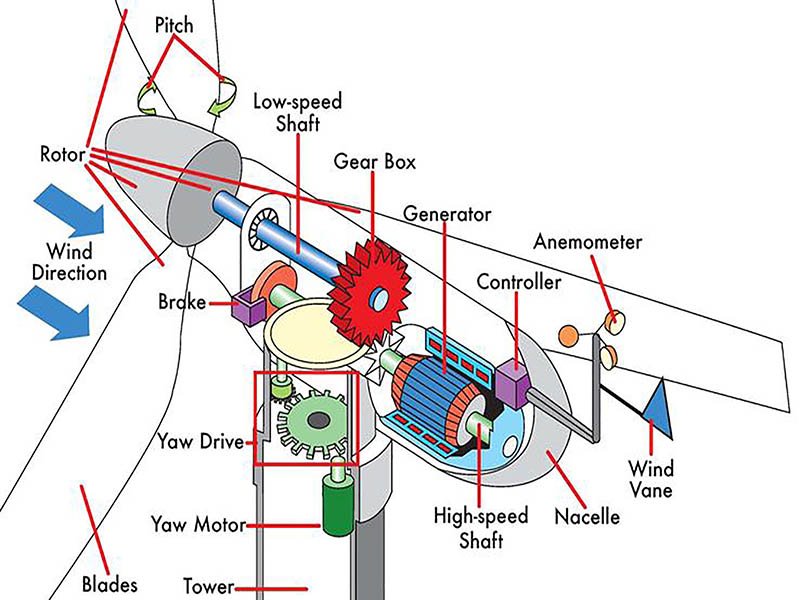
A wind turbine shaft is considered one of the main elements in the drive system of a modern wind power plant. It conveys mechanical energy produced by rotor blades to gearbox or generator. Considering that wind turbines work continuously being loaded and their shaft being exposed to different wind conditions, it should be able to resist great torsion forces and very long fatigue stresses.
Therefore, wind turbine main shaft is normally made of forged steel rather than being cast. Besides forging changes the inside structure of the metal and it also helps the production of large reliable wind energy equipments.
As such TIPTOP Heavy Forging manufactures turbine shaft forgings and other large forged components used in wind energy equipments and other heavy industrial systems.
What Is the Shaft of a Wind Turbine and How It Works in the Drivetrain
The shaft of a wind turbine is the mechanical part that links the rotor hub to other parts of the turbine drivetrain. When wind moves the blades, rotational energy is passed via the shaft system.In many turbine designs, the rotor hub is directly connected to the turbine rotor shaft, which carries the rotational load generated by the blades. This rotational motion is then transmitted to other drivetrain components such as the gearbox and generator.
Depending on the design of the turbine, the drivetrain may include:
a wind turbine main shaft (low-speed shaft)
a gearbox system
a high speed shaft in wind turbine connected to the generator
Each shaft plays a specific role in transmitting mechanical energy efficiently through the system.
Why the Shaft of a Wind Turbine Must Handle Heavy Loads
The shaft of wind turbine operates under demanding mechanical conditions. Wind loads change constantly, which means the shaft must withstand both steady torque and fluctuating stresses.
Large offshore turbines, for example, may have rotor diameters exceeding 150 meters. The mechanical load transferred through the main shaft for wind turbines can therefore be extremely high.
Typical stresses acting on the shaft include:
torsional loads from blade rotation
bending forces from wind variation
long-term fatigue from continuous operation
Because of these conditions, turbine manufacturers usually specify forged components with strict mechanical requirements.
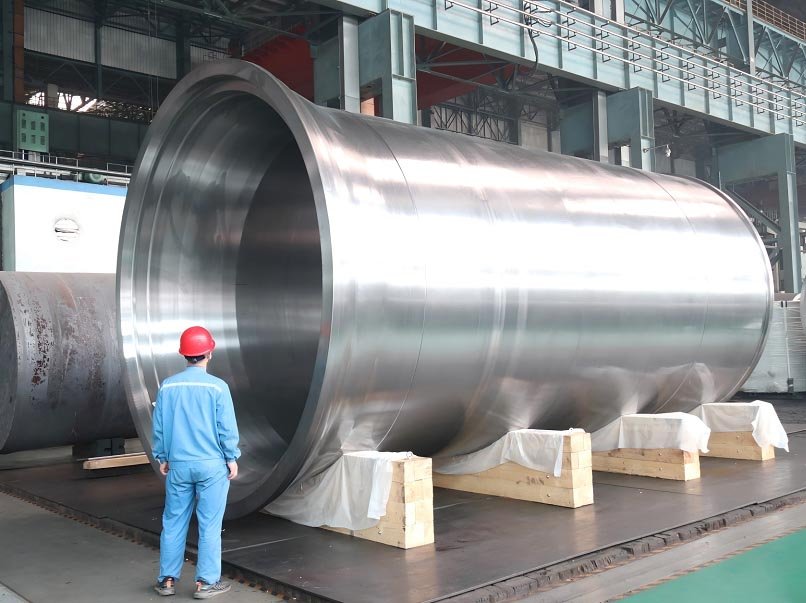
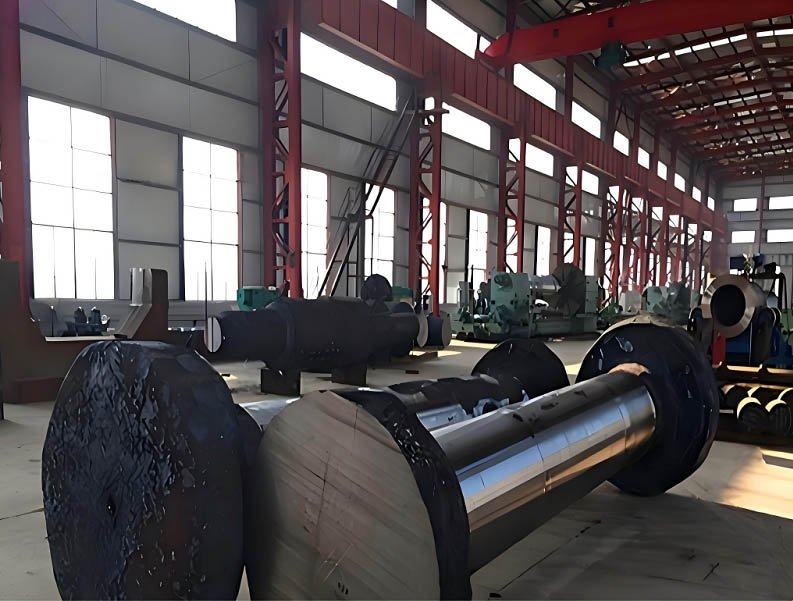
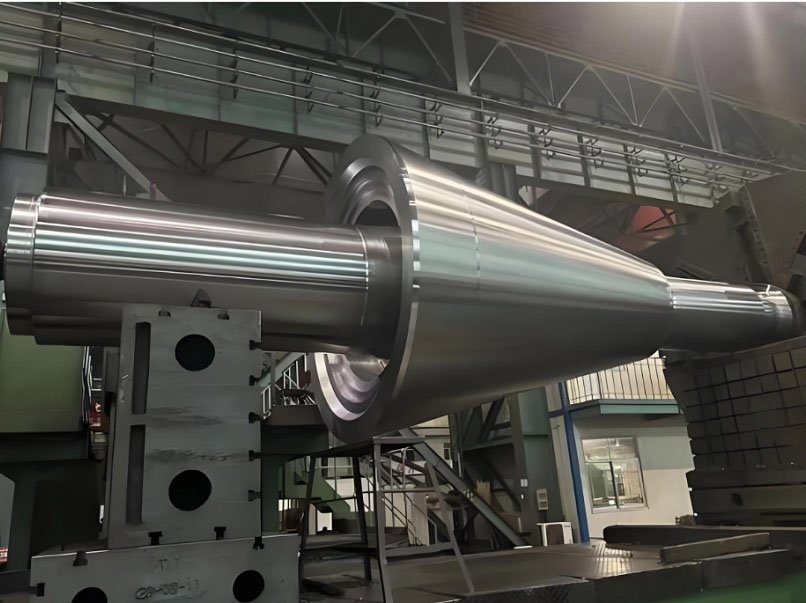
Turbine Shaft Material Used for the Shaft of a Wind Turbine
Selecting the correct turbine shaft material is critical for reliability and service life.
Most turbine main shaft forgings are produced from high-strength alloy steels designed to provide:
high fatigue resistance
good toughness
stable mechanical properties in large sections
Common materials used for turbine shaft forgings include low-alloy steels that can maintain strength while allowing large-scale forging and heat treatment.
The material must also allow precise machining since the shaft must meet strict dimensional tolerances for bearings and couplings.
Forging the Shaft of a Wind Turbine and Turbine Shaft Forgings
Large wind turbine shafts are typically manufactured using forging rather than casting. Forging helps improve the internal grain structure and reduces the risk of internal defects.
The production of turbine shaft forgings usually involves several stages:
steel ingot preparation
heating and large-scale forging
heat treatment to achieve required mechanical properties
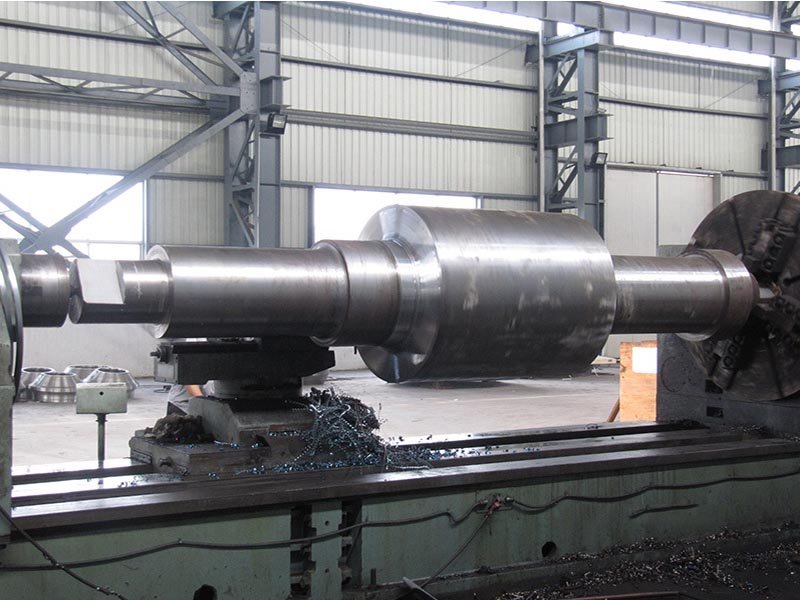
rough and finish machining
Because wind turbine shafts can be several meters long and weigh many tons, specialized heavy forging equipment is required.
At TIPTOP Heavy Forging, large forging presses and machining facilities are used to manufacture turbine main shaft forgings and other heavy industrial forged components.
Main Shaft for Wind Turbines vs High Speed Shaft in Wind Turbine Systems
Wind turbines normally contain more than one shaft. The most important is the main shaft for wind turbine systems, often referred to as the low-speed shaft.
This shaft connects directly to the rotor hub and rotates relatively slowly but carries very high torque.
In contrast, the high speed shaft in wind turbine systems is located after the gearbox. It rotates much faster but transmits lower torque to the generator.
Both shafts are essential, but the shaft of a wind turbine connected to the rotor generally requires larger dimensions and stronger forged materials.
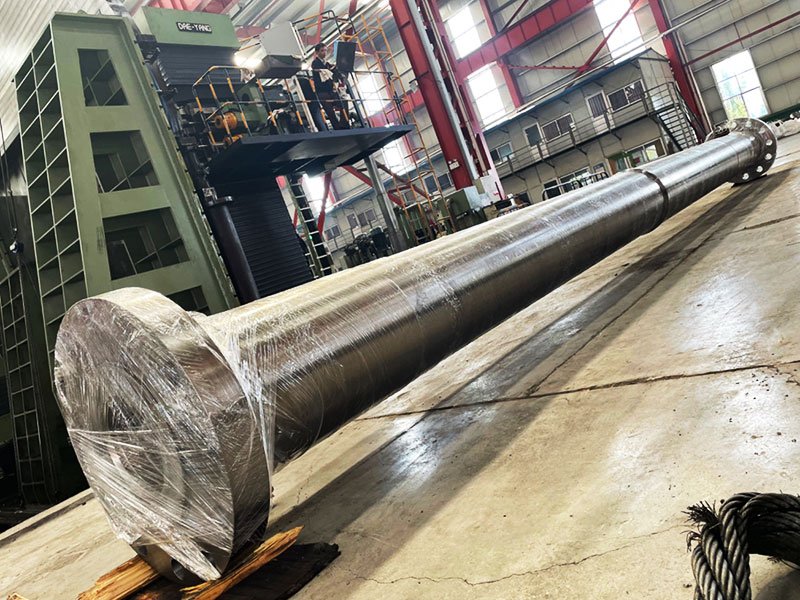
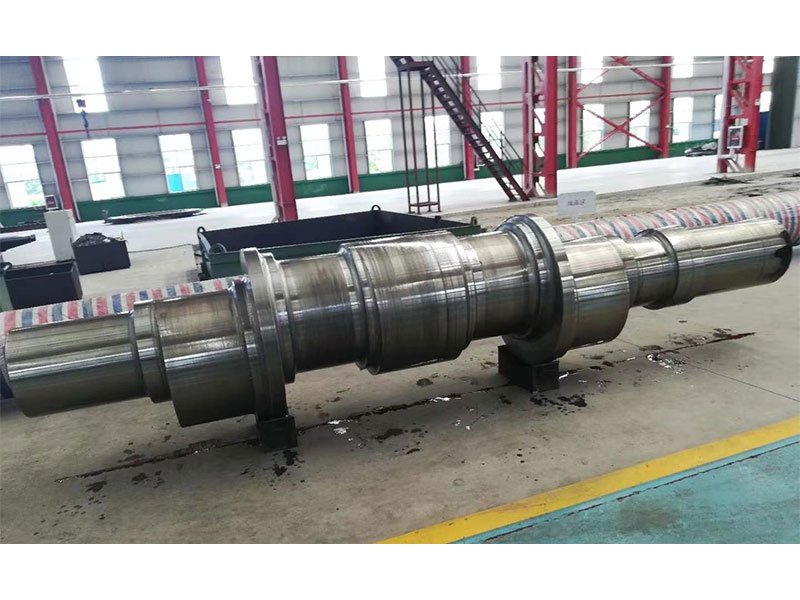
Manufacturing the Shaft of a Wind Turbine at TIPTOP Heavy Forging
Producing a large wind turbine main shaft requires both heavy forging capacity and machining capability.
At TIPTOP Heavy Forging, production typically includes:
large ingot forging operations
controlled heat treatment
ultrasonic and quality inspection
machining of shaft journals and coupling areas
Rather than manufacturing complete wind turbines, companies like TIPTOP narrowly focus on making turbine shaft forgings and other heavy forged components. Such parts are then assembled into wind turbine drivetrain systems by equipment manufacturers.
This kind of supplier arrangement is actually typical in the wind energy sector, where the specialized forging firms manufacture important drivetrain components.
What Makes the Shaft of a Wind Turbine so Crucial in Contemporary Wind Energy?
As wind turbines get larger and larger, the shaft of a wind turbine is the most pivotal element for ensuring the system’s reliability.
Increasingly large rotor diameters and higher energy outputs significantly stress the mechanical components of the drivetrain. Hence, main shafts that are forged find widespread application to provide the necessary structural integrity and to enable a longer operational lifespan.
In fact, wind turbine manufacturers and equipment suppliers consider getting dependable turbine shaft forgings from heavyweight forging players an integral part of delivering robust wind energy solutions.
Companies like TIPTOP Heavy Forging play a vital role in this supply chain by manufacturing large forged parts that are incorporated into the wind turbine drivetrain assemblies.