Q345R Pressure Vessel Head Forgings for High-Pressure Applications
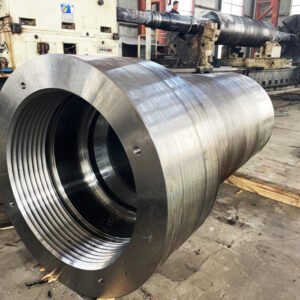
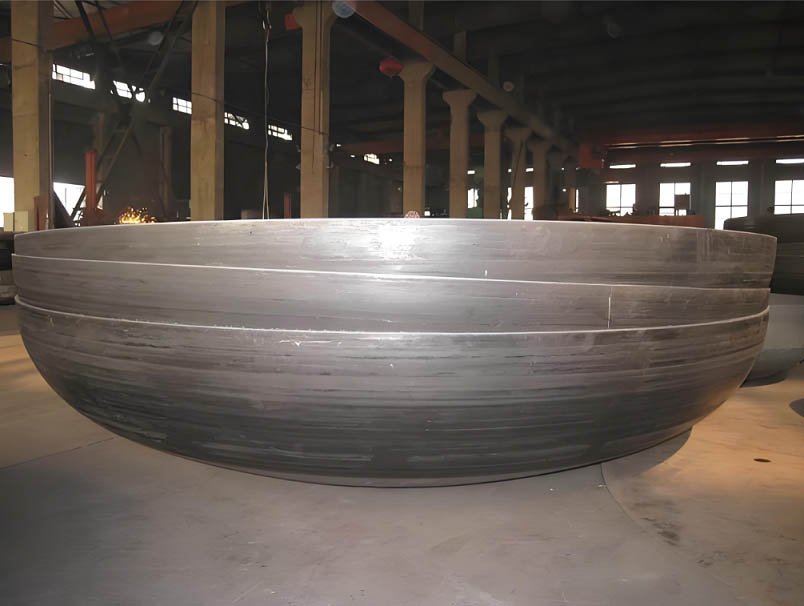
Q345R pressure vessel head forgings play an essential role as the main structural components that contain the load. They are responsible for sealing a pressure vessel and guaranteeing its safety when it is subjected to high pressure and temperature. Locating at the two ends of a cylindrical vessel, forged heads along with the shell can form the full pressure boundary of the vessel.
Description
Q345R pressure vessel head forgings play an essential role as the main structural components that contain the load. They are responsible for sealing a pressure vessel and guaranteeing its safety when it is subjected to high pressure and temperature. Locating at the two ends of a cylindrical vessel, forged heads along with the shell can form the full pressure boundary of the vessel.
In contrast to traditional formed heads, which are usually made by stamping or spinning, forged pressure vessel heads present better internal features, stronger mechanical properties, and higher safety in harsh environments, for example, petrochemical industry, power production, and high-pressure storage.
How Are Pressure Vessel Head Forgings Made?
Pressure vessel head forgings are the end covers of pressure vessels produced by forging under controlled conditions instead of cold forming.
Their main roles are:
– To seal the pressure vessel
– To be capable of holding internal pressure loads
– To spread stresses evenly inside the structure
– To guarantee operation safety over the long run
Being structural components, head forgings are subject to very high standards regarding strength, toughness, and overall quality without any flaws.
Why Choose Forged Heads Over Formed (Stamped or Spun) Heads?
For critical applications, the manufacturing method directly impacts performance and safety.
Forged Heads vs Formed Heads
| Property | Forged Head | Formed Head |
| Internal Structure | Dense, uniform | Possible thinning or defects |
| Mechanical Strength | High | Medium |
| Fatigue Resistance | Excellent | Limited |
| Thickness Uniformity | Better control | Risk of uneven thickness |
| Safety Margin | High | Lower |
👉 Conclusion:
Forged heads are the preferred solution for high-pressure, high-temperature, and critical service environments.
Material Options for Pressure Vessel Head Forgings
We provide a wide range of materials to meet different operating conditions:
Q345R
A commonly used pressure vessel steel with good strength, weldability, and cost-effectiveness. Suitable for general pressure applications.
15CrMoR
Alloy steel with improved high-temperature strength, widely used in boilers and high-temperature vessels.
Stainless Steel (304L / 316L)
Excellent corrosion resistance for chemical and offshore environments.
Duplex Stainless Steel (2205 / 2507)
High strength and superior resistance to stress corrosion cracking.
Nickel-Based Alloys (Inconel, Hastelloy)
Designed for extreme environments with high corrosion and high temperature.
👉 Material selection is based on pressure, temperature, and corrosion conditions to ensure optimal performance.
Forging Process of Pressure Vessel Heads
The reliability of forged heads depends on a strictly controlled manufacturing process.
Billet Preparation
High-quality steel billets or continuous cast slabs are cut and chemically verified before production.
Heating Process
Multi-stage heating furnaces are used to ensure uniform temperature distribution and prevent overheating or burning.
Forging Operations
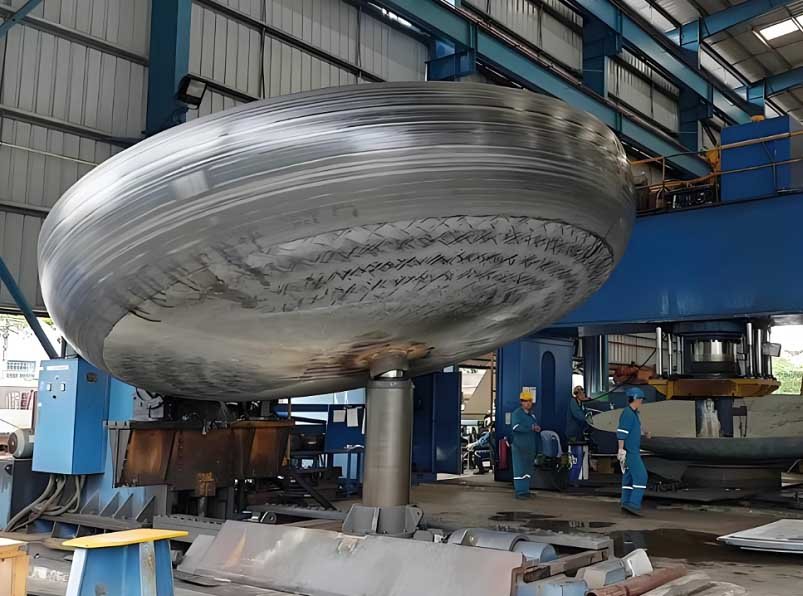
Using large-tonnage hydraulic presses or forging hammers:
- Upsetting and drawing
- Punching and reaming
- Controlled deformation to achieve required forging ratio
This ensures refined grain structure and improved mechanical properties.
Precision Forming
Ring rolling and shaping processes are applied to achieve accurate inner and outer diameters, roundness, and ellipticity.
Heat Treatment
Heat treatment is selected based on material type to:
- Relieve internal stress
- Optimize microstructure
- Improve strength and toughness
Machining
Large vertical lathes are used for:
- Sealing surface machining
- Bevel preparation for welding
- Inner and outer surface finishing
Inspection and Testing
Each forged head undergoes comprehensive testing:
- Mechanical property testing
- Non-destructive testing (UT, RT, PT)
- Dimensional inspection
- Hardness testing
Key Advantages of Our Pressure Vessel Head Forgings
High Structural Integrity
Forging eliminates internal defects such as porosity and segregation, ensuring reliable performance under pressure.
Full Traceability
Each product is supplied with complete documentation:
- Heat number and batch traceability
- Forging process records
- Heat treatment curves
- Inspection reports
Flexible Customization
We support:
- Custom dimensions and geometries
- Non-standard designs based on drawings
- Flexible minimum order quantities
Short Lead Time
With strong forging capacity and raw material inventory, we can reduce delivery time by 20–30%, ensuring fast project response.
One-Stop Manufacturing Solution
We provide complete services including:
- Forging
- Heat treatment
- Machining
- Non-destructive testing
Typical Applications of Forged Pressure Vessel Heads
Our forged heads are widely used in:
Petroleum Refining
- Hydrogenation reactors
- Catalytic cracking units
- High-pressure separators
Coal Chemical Industry
- Gasifiers
- Shift converters
- Scrubber vessels
Power Generation
- Boiler drums
- Steam generators
- Pressurizers
Cryogenic Engineering
- LNG storage tanks
- Liquid oxygen and nitrogen vessels
General Chemical Industry
- High-pressure storage tanks
- Heat exchanger channel heads
- Reactor vessel bottoms
Custom Forged Head Solutions for Pressure Vessels
We provide tailored solutions based on your project requirements:
- Head type (elliptical, hemispherical, torispherical)
- Diameter and thickness
- Material selection
- Heat treatment requirements
- Inspection standards
FAQ: Pressure Vessel Head Forgings
Q1: What is the advantage of forged heads over spun heads?
Well-forged heads entail a tighter grain structure and more strength, so they are the safest choice for extremely high-pressure applications.
Q2: What material is best for pressure vessel heads?
Q345R is widely chosen while alloy and stainless steels are mainly used for elevated temperatures and/or corrosive environments.
Q3: Can pressure vessel heads be customized?
Yes, all the parameters including sizes, materials and standards may be tailored to the customers’ requirements.
Q4: What inspections are required for forged heads?
They generally include UT, RT, PT, mechanical testing and dimensional inspection.