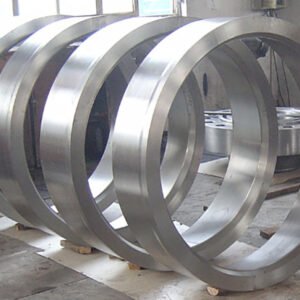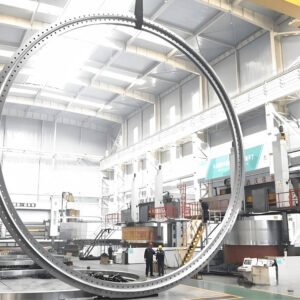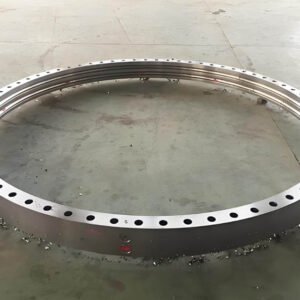
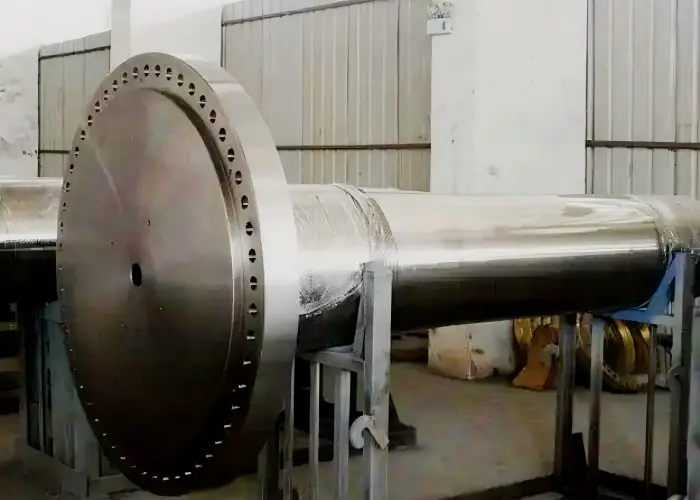
Large diameter Wind Turbine Shaft Forgings Used for Main Shaft, Gearbox Shaft, Yaw Shaft
Wind turbine shaft forgings bridge the hub and gearbox, converting wind energy into mechanical power while handling immense torque.Designed for tough operating conditions—high cyclic loads, severe temperature swings, and salt-spray exposure—these components demand exceptional material integrity, precise forging, and controlled heat treatment.
Description
1. Introduction to Wind Turbine Shaft Forgings
Wind turbine shaft forgings bridge the hub and gearbox, converting wind energy into mechanical power while handling immense torque.Designed for tough operating conditions—high cyclic loads, severe temperature swings, and salt-spray exposure—these components demand exceptional material integrity, precise forging, and controlled heat treatment. TIPTOP’s forgings are already trusted across onshore and offshore wind farms, proven to reduce maintenance intervals and deliver reliable performance over decades of service.
2. Commonly Used Forging Materials for Wind Turbine Shaft Forgings
The most frequently used materials include:
2.1 Main Alloy Structural Steels
34CrNiMo6 – High-toughness material, one of the most common grades for main shafts. Tensile strength ≥850 MPa, yield strength ≥700 MPa. Suitable for cold regions (–40°C).
42CrMo4 – Medium-high strength alloy steel, after quenching and tempering tensile strength can reach 900–1100 MPa, yield strength ≥650 MPa. Suitable for normal-temperature main shafts.
- 30CrNiMo8 – High strength and toughness.
- 18CrNiMo7-6 – Alloy structural steel, used for some high-load main shafts.
- 2.2 Other Commonly Used Materials
- 42CrMo, 35CrMo, 40Cr – High-strength alloy steels, selected based on load, environment, and cost considerations.
- 20Cr2Ni4MoV – For specific requirements in wind turbine shaft forgings.
- 45#, 50# – Carbon steels, suitable for general transmission shafts.
- F22V (ASTM A182) – Low-temperature impact-resistant material, with impact energy KV2 ≥60J at –40°C.
2.3 Material Purity Requirements
Extremely high purity is required: sulfur and phosphorus contents are controlled to S ≤0.005% and P ≤0.010%, and inclusion ratings are controlled per ASTM E45. For premium products, a dual process of vacuum degassing (VD) + electro-slag remelting (ESR) is adopted, with hydrogen content kept below 1.5 ppm.
3. Why Forging Instead of Casting for Wind Turbine Shafts?
Forging is preferred over casting for the following core reasons:
3.1 Internal Structure and Mechanical Property Advantages
Forging ensures continuous metal fibre flow lines, resulting in superior mechanical properties and longer service life. Although casting allows rapid near-net shaping with higher material utilisation, its mechanical properties are inferior to those of forged components of the same material.
3.2 Fatigue Resistance and Load-Bearing Capacity
Wind turbine main shafts endure continuous alternating bending loads and torque impacts. Forging can improve fatigue life by more than 30% compared to cast alternatives.
3.3 Current Application Status
Both domestic and international wind power main shaft markets still predominantly use forged shafts. The performance and service life of forged shafts have been proven over time and are widely recognised by turbine manufacturers. Cast shafts, while lower in cost, still require further validation of their performance and longevity.
3.4 Application Scenario Differences
Forging is suitable for high-stress, harsh operating environments.
4. Dimensional Range of Wind Turbine Shaft Forgings We Can Produce
| Parameter | Range |
| Diameter | 100 mm – 6000 mm |
| Length | Up to 18 metres |
| Single-piece weight | 500 kg – 60 tonnes |
| Covered turbine ratings | 2 MW – 10 MW+ mainstream wind turbine models |
We offer customised production according to customer drawings and specifications. Our products are widely used in wind power equipment, construction machinery, oilfield machinery, marine equipment, chemical plant, and more.
5. Product Advantages of Our Wind Turbine Shaft Forgings
5.1 Excellent Mechanical Properties
Through a “quenching & tempering + stress-relief annealing” process, we achieve a combination of high core toughness and high surface strength. The quenched and tempered structure provides fine-grained tempered sorbite, greatly enhancing fatigue life. Hardness is stable at 240–280 HB, and core impact toughness ≥45 J/cm² (at 20°C).
5.2 Advanced Forging Technology
Strict forging ratios and multi-directional forging effectively eliminate as-cast structural defects, distribute metal flowlines rationally along the stress direction, and significantly improve impact toughness and fatigue strength.
5.3 Strict Heat Treatment Control
Precisely controlled quenching and tempering processes using advanced controlled-atmosphere furnaces and quench oil tanks. For 42CrMo4, after quenching and high-temperature tempering, tensile strength reaches 900–1100 MPa, with elongation not less than 12%.
5.4 Full-Process Non-Destructive Testing
Each piece undergoes 100% ultrasonic testing (UT) and magnetic particle testing (MT). Additional mechanical tests, metallographic analysis, and 3D dimensional scanning can be performed upon request. All products strictly comply with GB/T 8541, EN 10204, and other international standards.
5.5 Extended Equipment Service Life
Customer feedback shows that after using our wind turbine shaft forgings, the maintenance interval of main shafts is extended by an average of more than 30%, significantly reducing wind farm operation and maintenance costs.
5.6 Customised Solutions
Customised solutions are available for different tower heights and rotor diameters – from material selection to heat treatment regimes, adjusted according to specific operating conditions. For cold regions (–40°C), we have specially developed material systems with excellent low-temperature impact toughness.
6. Our Strengths in Manufacturing Wind Turbine Shaft Forgings
6.1 Complete Production Chain
We possess a fully integrated production chain from raw material inspection, forging, heat treatment, to machining. Controlled forging and controlled cooling technologies eliminate white spots and hydrogen embrittlement risks, ensuring internal density of shaft forgings.
6.2 Advanced Production Equipment
Equipped with large-scale heat treatment furnace groups to satisfy heat treatment requirements for various product sizes.
6.3 Strict Quality Management System
A traceable batch management system is established; each product carries a unique identification code, ensuring full-lifecycle quality control from steelmaking to shipment. The company is ISO 9001 certified.
6.4 Rich Industry Experience
Our products have been extensively used in onshore 2 MW to offshore 10 MW wind turbines, with cumulative deliveries exceeding 2,000 main shaft forgings.
6.5 Rapid Delivery and Flexible Production
Quick die-change systems and a process parameter database enable efficient response to both mass orders and small-batch trial productions. With an annual comprehensive production capacity of 35,000 tonnes of shaft forgings, we can simultaneously handle multiple batch orders.
6.6 Technology R&D and Innovation
We have long been dedicated to the R&D and manufacturing of wind power shaft components. Through years of technical accumulation and continuous innovation, we have grown into an influential supplier of shaft forgings in the industry.