
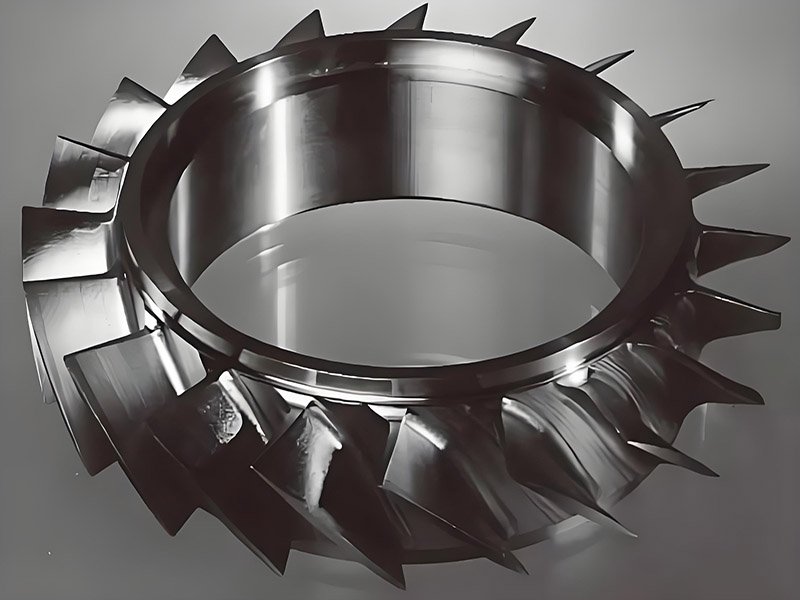
In aerospace, the real challenge is not achieving strength—it is maintaining reliability when conditions change.
This is why aerospace forgings are used in parts where failure cannot be tolerated. The value of forging is not only in how a component performs once, but in whether it behaves the same way every time it is loaded.
Aerospace Forgings and Why Aerospace Parts Forging Focuses on Reliability
The reason aerospace parts forging is widely used is often explained as “higher strength.” In practice, engineers are solving a different problem.
Aircraft components are rarely subjected to a single load. They experience repeated stress over long service cycles, where small inconsistencies can accumulate into failure risks. In this context, aerospace forgings are chosen because they respond to stress in a more predictable way.
For decision-makers, the advantage is not maximum performance, but reduced uncertainty.
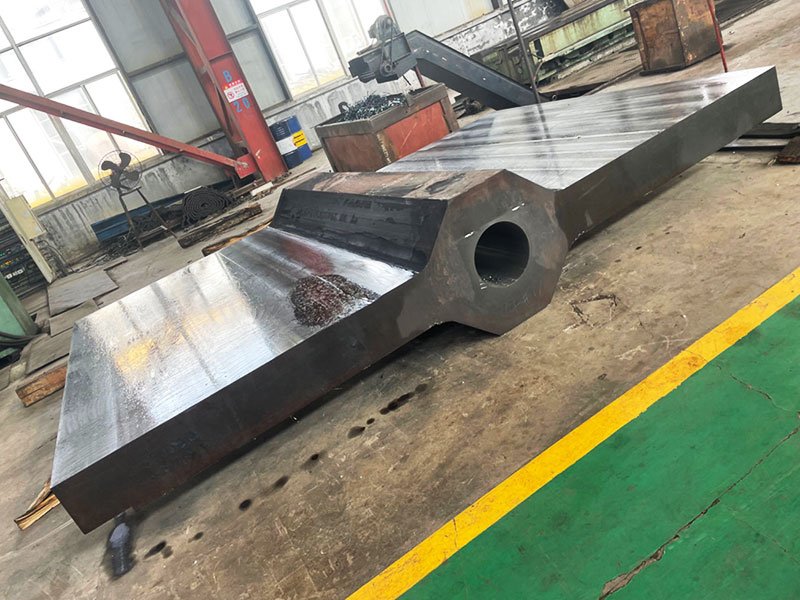
Aerospace Forgings Materials and How Aerospace Forging Materials Behave in Service
Discussions around aerospace forging materials often focus on alloy types, but material selection alone does not define performance.
What matters more is how the material behaves after forming. In forged aerospace parts, the internal structure evolves during processing, and that structure determines how the component reacts to fatigue, temperature variation, and load redistribution.
This is why the same material grade can perform differently depending on how the aerospace forging process is controlled.
Aerospace Forgings Service and Why Consistency Matters More Than Capability
Many suppliers can offer an aerospace forging service, but capability is rarely the limiting factor in aerospace projects.
What buyers actually evaluate is whether the supplier can deliver the same result repeatedly. A component that performs well once but varies in the next batch introduces risk that cannot be easily corrected later.
In this sense, aerospace parts forgings are less about what a supplier can produce, and more about how stable their process is over time.
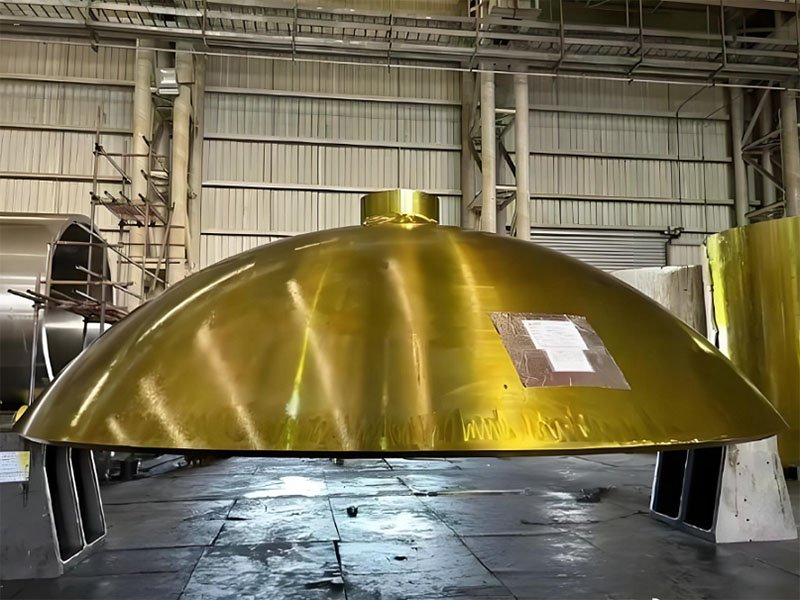
Aerospace Forgings and the Real Meaning of AS9100C Aerospace Forging
Standards such as AS9100C aerospace forging are often treated as indicators of quality, but they mainly ensure that processes are documented and controlled.
From an engineering perspective, certification is a baseline. It confirms that a system exists, but not how effectively it is executed. The real difference appears when those processes are applied to complex or heavy-section components, where maintaining uniformity becomes more difficult.
This is where aerospace forgings are tested in practice, not on paper.
Aerospace Forgings in Heavy Sections and Why Size Changes the Challenge
Not all aerospace forgings face the same level of difficulty. As component size increases, maintaining internal consistency becomes significantly more complex.
In heavy-section forged aerospace parts, the challenge is not shaping the part, but ensuring that properties remain uniform from surface to core. Variations that are negligible in smaller components can become critical at larger scales.
This is where manufacturing approach starts to define performance, rather than just design.

Aerospace Forgings and How TIPTOP Addresses Large Forging Challenges
From what can be observed on https://heavyforging.com/, TIPTOP’s focus is on large-scale forging, where the main challenge is controlling what cannot be seen—the internal condition of the material.
In the context of aerospace forgings, this shifts the focus away from surface features and toward structural consistency. For customers working with large or load-critical parts, this becomes more relevant than having a wide product range.
Rather than emphasizing capability in general terms, the value lies in reducing variation where it is hardest to control.
Aerospace Forgings and Why Process Stability Defines Final Performance
For aerospace forgings, performance is often decided long before the part is finished. Once the internal structure is formed, later processes can refine but not fundamentally change it.
This makes process stability the defining factor. A stable process produces parts that behave predictably, while variability introduces differences that may only appear under service conditions.
For aerospace applications, this distinction is critical because issues often emerge after deployment, when correction is no longer simple.

Aerospace Forgings and the Real Advantage Behind Forged Aerospace Parts
The advantage of forged aerospace parts is often summarized in terms of strength or durability. In practice, the more important benefit is consistency under repeated use.
Components that behave predictably allow engineers to design with confidence. Components that vary introduce margins that increase weight, cost, or risk.
This is why aerospace parts forging continues to be used in critical areas, even when alternative methods are available.
Conclusion: Aerospace Forgings Are About Controlling Variability
At a surface level, aerospace forgings are about shaping metal into high-performance components. At a deeper level, they are about controlling variability in environments where small differences matter.
For engineers, this means predictable behavior under load.
For buyers, it means fewer uncertainties across production and service life.
For manufacturers like TIPTOP, the challenge is not to highlight advantages, but to maintain consistency where it is hardest to achieve—inside every batch of aerospace parts forgings.