
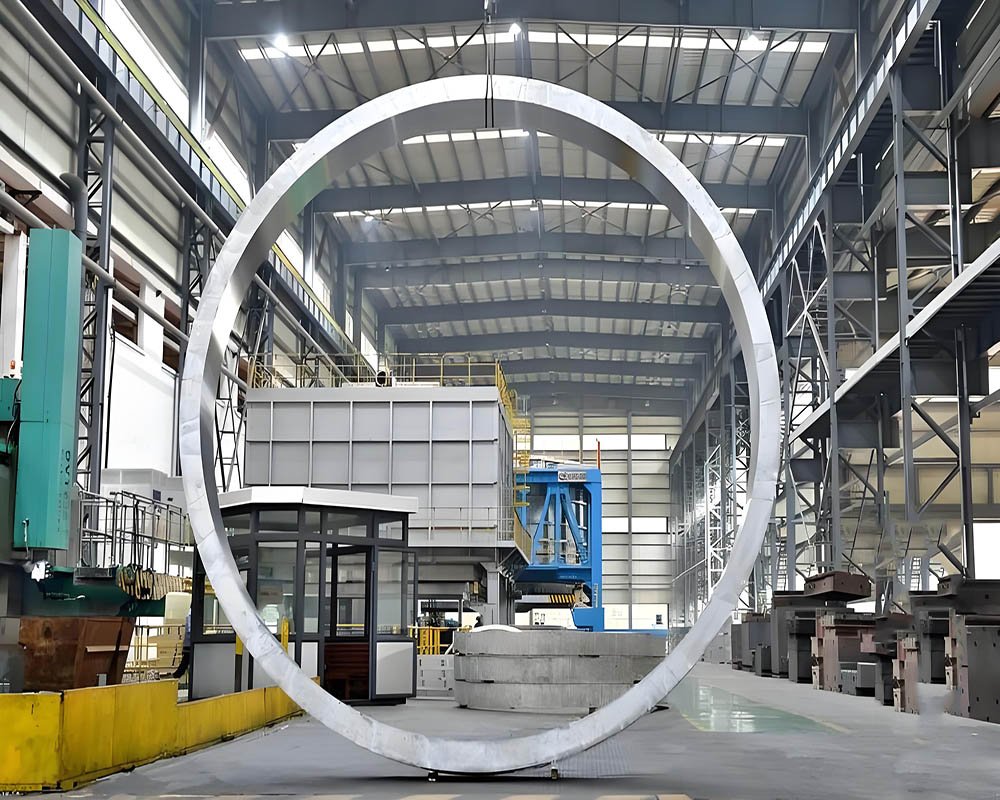
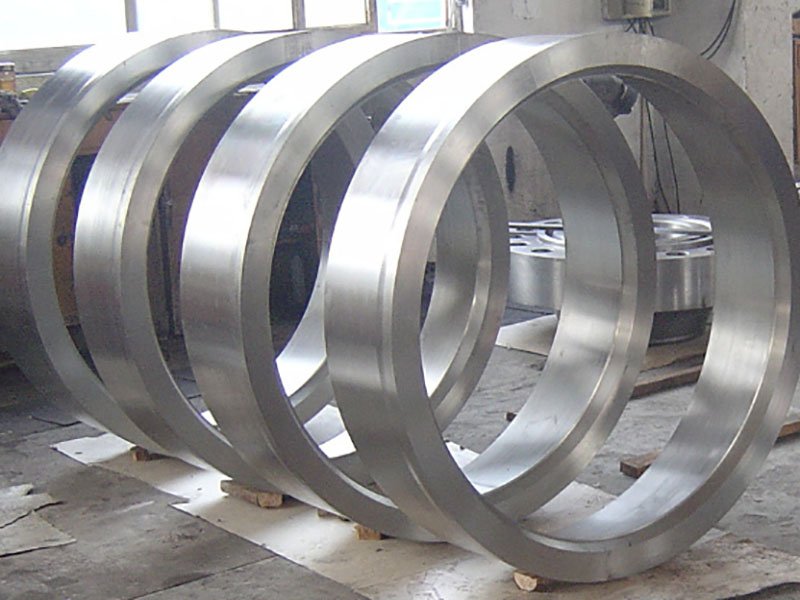
Forged rings are seamless circular metal components produced through controlled forging processes to achieve high structural integrity and reliable mechanical performance. Compared with cast or welded rings, forged rings offer superior grain flow continuity, higher load-bearing capacity, and improved fatigue resistance. These advantages make forged rings essential for demanding industrial applications where strength, dimensional stability, and long service life are required.
As a core product category in modern forging, forged rings are widely used across energy, heavy machinery, aerospace, marine, and oil & gas industries.
Forged Rings Meaning and Ring of Forging Concept
A forged ring, sometimes referred to as a ring of forging, is formed by plastically deforming a solid billet or hollow preform into a closed circular shape. During forging, the internal grain structure follows the ring geometry, creating a continuous flow that significantly enhances mechanical strength compared to machined or fabricated rings.
Unlike flat forgings or blocks, forging rings are designed to withstand radial, axial, and torsional loads simultaneously, which explains their extensive use in rotating and pressure-related equipment.
Forged Rings Manufacturing Methods and Rolled Ring Forging
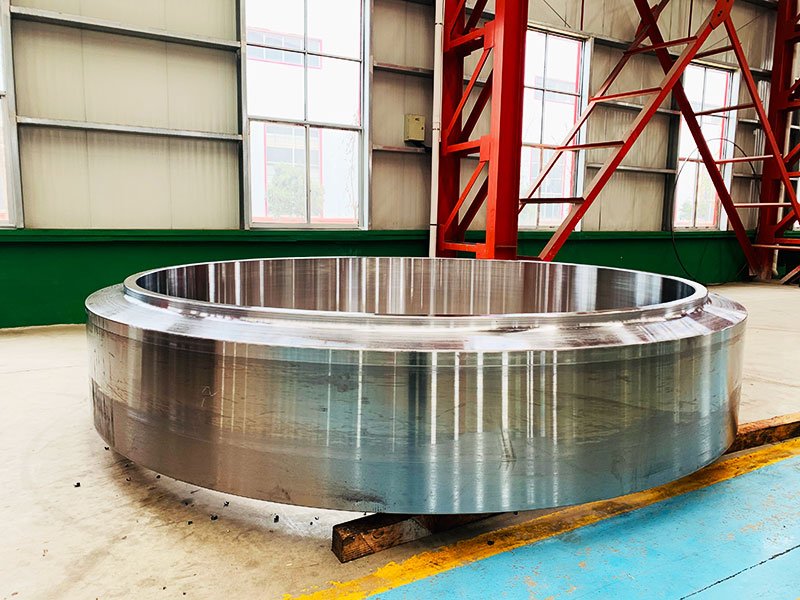
Forged rings are typically produced using open die forging combined with ring rolling operations. In this process, a pierced billet is gradually expanded under compressive forces to form a seamless circular shape. This method is commonly known as rolled ring forging.
For applications requiring tighter dimensional control and material efficiency, seamless rolled ring forging is preferred. It allows manufacturers to produce near-net-shape forged rings with reduced machining allowances while maintaining excellent internal soundness.

Materials Used in Forged Rings Manufacturing
Depending on the working conditions and performance requirements, forged rings can be made from a number of different metal materials.
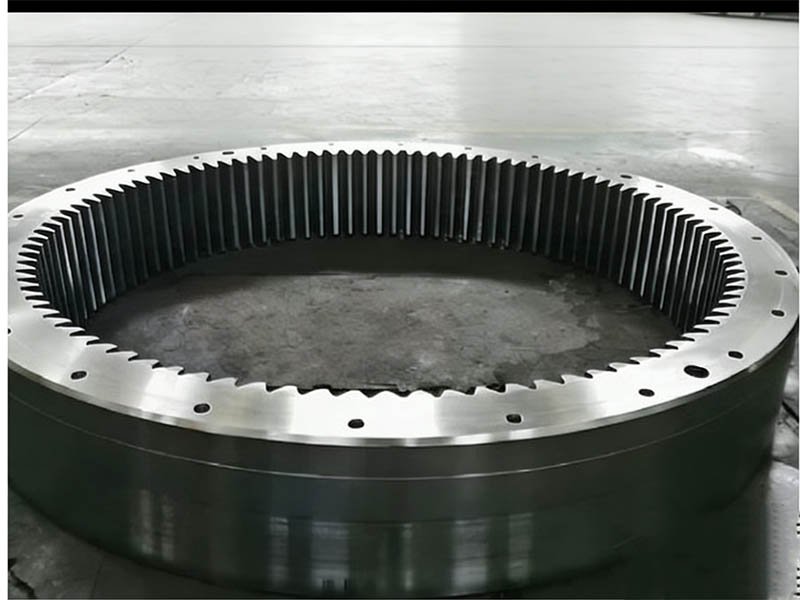
Steel forged rings, such as carbon steel and alloy steel grades, are typically used in high-load applications such as gears, flanges, and bearing races. For applications that are sensitive to cost and have moderate mechanical requirements, forged iron rings are a good choice. In situations where weight is a consideration or corrosion resistance is required, aluminum forged rings offer an excellent solution.
In some cases, forged metal rings may also be made from stainless steel, nickel-based alloys, or advanced composite-related materials, depending on service temperature, pressure, and corrosion exposure.
Forged Rings vs Forged Flanges: Key Differences
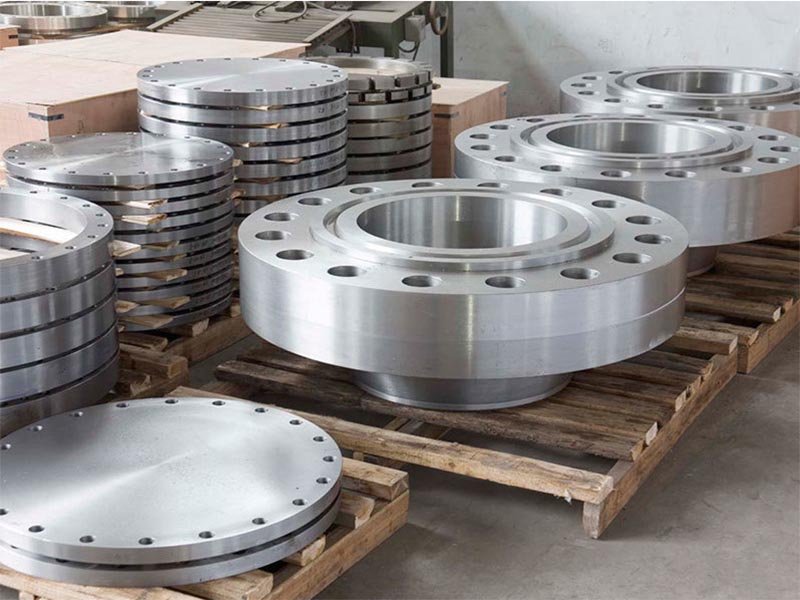
While both forged rings and forged flanges are made using similar manufacturing processes, their purposes are very different. Forged rings are load-bearing structural components that are designed to carry load or support a rotating assembly, whereas forged flanges are mostly used as connecting elements in piping systems.
Typically, forged rings have a consistent cross-section and the grains are aligned throughout the circumference, however, flanges have bolt holes, hubs or sealing faces that change the stress pattern. Recognizing this difference is essential when choosing the right forged component for industrial equipment.
Large Industrial Forged Rings Applications
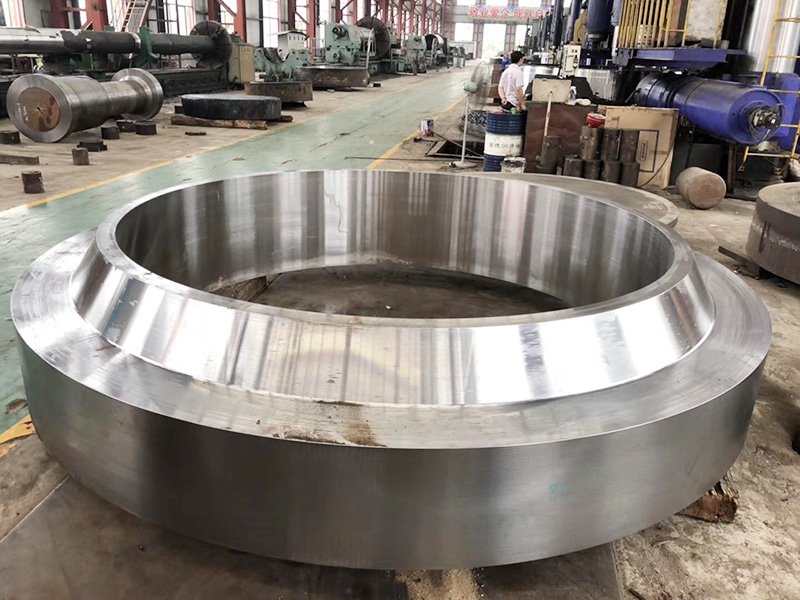
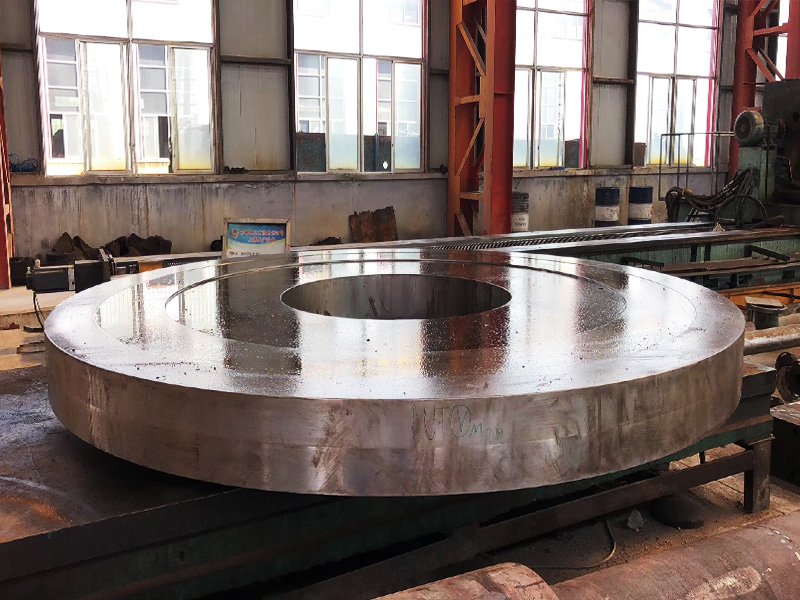
The use of large industrial forged rings is quite common in those situations where size, strength, and reliability cannot be compromised. To name a few, the typical applications are the bearing rings of wind turbines, gear rings, pressure vessel components, rotary kiln rings, and heavy-duty transmission systems.
These forged rolled rings are designed to withstand very high loads, thermal cycling, and long-term fatigue, thus, they are a must in the energy, mining, marine, and heavy manufacturing industries.

Forged Rings Manufacturing Capabilities at TIP TOP Forging
TIP TOP Forging uses controlled forging and rolling processes when producing forged rings to comply with the highest industrial standards. We are an experienced forged rings manufacturer capable of supplying both standard and custom forging rings according to the customer’s drawings and application requirements.
We produce carbon steel, alloy steel, stainless steel, aluminum alloys, and a few special materials. By accurately controlling the temperature, managing the deformation, and performing post-forging heat treatment, TIP TOP can make forged rings that have stable mechanical properties and are dimensionally accurate.
Forged Rings Quality Control and Performance Assurance
It is well-known that the quality of forged rings heavily relies on the process control of the entire stages of forging and finishing. Factors such as materials used, forging reduction ratio, rolling uniformity, and heat treatment parameters must be carefully controlled to ensure that the forged rings have good internal structure and mechanical strength.
Before being shipped to customers, forged rings are most often subjected to non-destructive testing, dimensional and metallurgical inspection, which are performed to ensure that they comply with the design and service requirements.
Summary: Forged Rings for High-Performance Industrial Use
Forged rings are essential for industries requiring circular components that are highly resistant and capable of bearing heavy loads. The process of forging seems to be unrivaled when it comes to providing structural durability and performance consistency.
TIP TOP Forging enables global customers to get a wide range of high-quality forged rings for highly demanding industrial applications.