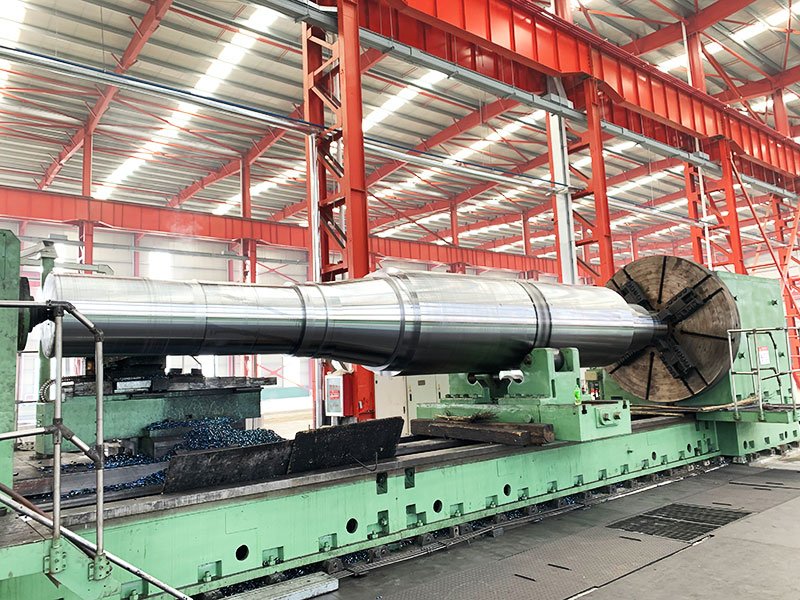
Hot/ Cold Forged Steel Work Roll for Rolling Mill
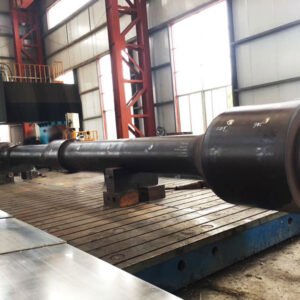
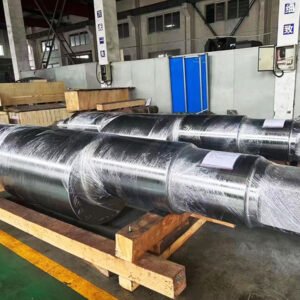
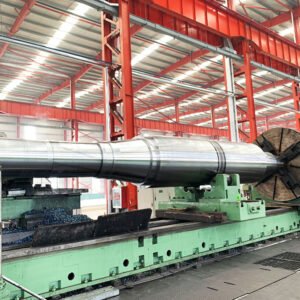
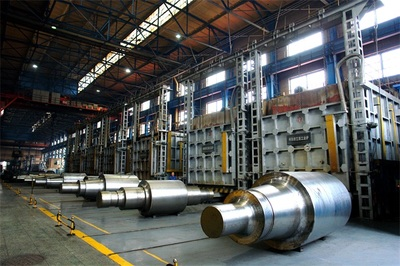
Forged work rolls refer to mill work rolls manufactured through the forging process and serve as the core components of metallurgical rolling equipment.
Description
1. Product Introduction
Forged work rolls refer to mill work rolls manufactured through the forging process and serve as the core components of metallurgical rolling equipment. Compared with their cast counterparts, forged steel rolls offer superior strength, toughness, uniform surface hardness, and fatigue resistance, making them widely utilized in the modern steel rolling industry. Our company professionally provides forged work rolls in various dimensions and material grades, and we welcome customization based on customer drawings.
2. Performance Advantages of Our Forged Work Rolls
2.1 Ultra-High Wear Resistance
Our forged work rolls exhibit outstanding wear resistance. Take the high-grade forged high-speed steel (HSS) work roll as an example: its wear resistance is far superior to traditional materials—more than 7 times that of Cr5 forged steel rolls and 2 to 3 times that of conventional forged HSS. Actual field trials of our 8Cr4MoV low-alloy forged steel cold work rolls demonstrate a wear resistance over 1.6 times that of conventional Cr2 work rolls. This significantly extends the roll-changing cycle and reduces roll consumption per ton of steel, saving substantial production costs for our clients.
2.2 Excellent Accident Resistance
Our forged work rolls possess exceptional thermal shock resistance. Thermal shock damage caused by mill accidents on our forged HSS rolls is only one-tenth of that on traditional Cr5 rolls. Combined with a 3x increase in wear resistance, the roll-changing cycle is more than doubled.
These accident-resistant work rolls require minimal stock removal during accident grinding, making them particularly suitable for rolling mills or stands prone to rolling accidents. When rolling sheets that require high precision, high deformation resistance, ultra-thin gauges, or strict surface quality, these rolls significantly extend service cycles, improve surface quality, and drastically reduce abnormal roll consumption caused by mill accidents.
2.3 Excellent Surface Quality Retention
Our forged work rolls feature outstanding surface roughness retention and scratch resistance, doubling (>100\%) the strip shape control capability compared to Cr5 chrome-plated rolls. The high homogeneity of the material minimizes segregation and structural non-uniformity, ensuring zero color difference across the roll body surface. This makes them ideal for applications with stringent surface quality requirements, such as skin pass mills and galvanizing line smoothing mills.
2.4 Deep Hardened Layer & Uniform Hardness
Utilizing advanced metallurgical processes and heat treatment technologies, our forged work rolls achieve deep hardened layers and excellent hardness uniformity:
5% Cr Series: Effective hardened layer depth can reach 20–40 mm.
8% Cr (Semi-HSS) Series: Hardened layer depth can exceed 20 mm.
The hardness uniformity and hardness drop across the entire work roll can be strictly controlled within 2 HSD.
2.5 High Strength & Extended Service Life
Manufactured via Electroslag Remelting (ESR), integral forging, and deep heat treatment, our work rolls possess high rigidity, high hardenability, wear and fatigue resistance, and excellent resistance to spalling and cracking. The uniform hardness of the roll body combined with optimized forging techniques ensures that internal carbides are finely and dispersedly distributed, effectively extending the service life. For instance, our 8Cr4MoV low-alloy forged steel work rolls show zero spalling during operation, demonstrating superior accident resistance.
3. Core Materials for Forged Work Rolls
The materials used for forged work rolls are primarily high-carbon alloy tool steels. Based on chromium content, they are categorized into the following series:
2%Cr Series: Chromium content is approx. 2%. Representative grades include 9Cr2, 9Cr2Mo, 9Cr2MoV, 86Cr2MoV7, 86CrMoV7, etc. Suitable for manufacturing cold work rolls, back-up rolls, and straightening rolls.
3%Cr Series: Chromium content is approx. 3%. Representative grades include 9Cr3Mo, 8Cr3MoV (commonly known as MC3A, MC3). Suitable for large 4-high or 6-high rolling mills, skin pass mills, finishing mills, etc.
5%Cr Series: Chromium content is approx. 5%. Widely used in large tandem cold mills, large single-stand mills, and skin pass mills.
6% Cr & 8% Cr Series: Chromium content ranges from 6% to 8%. Representative grades include 9Cr6MoV, 9Cr8Mo1V (commonly known as Semi-High-Speed Steel, SHSS), etc. This is the premier choice for high-performance roll materials.
In addition, commonly used materials for hot work rolls include 55Mn2, 55Cr, 60CrMnMo, 60SiMnMo, etc. We can also provide customized material formulations tailored to specific application scenarios and operating conditions.
4. Classifications of Forging Processes
The forging processes for work rolls primarily include the following types:
4.1 Open-Die Forging
This is currently the standard industry method for shaping cold work rolls. The basic steps include upsetting, drawing out, punching, cutting, bending, twisting, offsetting, and forge welding. For large-scale work rolls, the Wide Anvil Heavy Reduction Method (KD Method) and the Wide Flat Anvil Strong Forging Method (WHF Method) are frequently employed.
4.2 Multi-Heating Forging Process
For large-specification or high-alloy work rolls, a multi-heating forging method is generally adopted. For example, Cr6-type cold work rolls are produced using a 4-heating process:
1st heating: Upsetting and drawing out.
2nd heating: Heavy reduction forging.
3rd & 4th heating: Final forging to finished dimensions.
4.3 Hot Extrusion Molding
This process uses hot extrusion dies to extrude the blank into a bar, which is then drawn out to the finished size via open-die forging. Alternatively, the cold work roll can be directly hot-extruded to its final finished dimensions.
5. Applications of Forged Work Rolls
Our forged work rolls are widely utilized across various types of rolling mills in the metallurgical field:
5.1 Cold Rolling Applications
Forged steel rolls are predominantly used in cold rolling mills to enhance steel surface quality and dimensional accuracy at ambient temperatures. They provide stable surface finishes and strict dimensional tolerances for high-precision industries.
Specific applications: Rolling of cold-rolled sheets, cold-rolled strip steel, cold-rolled silicon steel, tinplate, etc.
5.2 Hot Rolling Applications
Engineered specifically for hot rolling processes, these rolls ensure precise dimensional control and excellent surface finishes while withstanding extreme thermal and mechanical stresses.
Specific applications: Rolling of hot-rolled strips, hot-rolled slabs, sections, and tubes.
Performance note: High-speed steel (HSS) hot work rolls offer 3 to 5 times the wear resistance of conventional hot rolls and retain high hardness even at temperatures up to 600°C.
5.3 Other Applications
lLarge tandem cold rolling mills
Automotive sheet rolling
Skin pass mills and smoothing mills
High-frequency straight-seam welded pipe production lines
Bar and wire rod mills
6. Available Dimensions and Specifications
Equipped with robust heavy-forging production capabilities, we can manufacture various forgings ranging from Φ100 mm to Φ 6000 mm , covering a full spectrum of products from small precision work rolls to massive, heavy-duty industrial rolls.
| Parameter | Capability Range |
| Diameter Range | $\Phi100\text{ mm}$ to $\Phi6000\text{ mm}$ (for both forged blanks and finished rolls) |
| Length Range | Customized per request; maximum roll body length can exceed 6000 mm |
| Single Unit Weight | Maximum single forged work roll weight can reach 20 tons and above |
| Applicable Materials | Carbon steel, alloy steel, stainless steel, and various high-alloy specialty steels (2% Cr to 8% Cr series, HSS, Semi-HSS, etc.) |
7. Our Manufacturing Advantages (TIPTOP)
7.1 Advanced Metallurgical Process: We utilize a premium metallurgical route: EAF (Electric Arc Furnace) + LF (Ladle Furnace) + VD (Vacuum Degassing) + ESR (Electroslag Remelting).
7.2 State-of-the-Art Forging Equipment: Our flexible manufacturing capabilities span open-die forging, die forging, and hot extrusion, allowing us to select the optimal process based on the workpiece specifications and material characteristics.
7.3 Comprehensive Heat Treatment System: Equipped with dual-frequency induction hardening machinery and protective atmosphere heat treatment furnaces, we achieve precise control over critical performance indicators such as hardness, hardened layer depth, and residual stress.
7.4 Full-Process Quality Control: From raw material selection, melting, forging, and heat treatment to final precision machining, we implement a strict quality management system.
7.5 Comprehensive Technical Service: We provide full lifecycle technical support, including pre-sale technical consultation, roll configuration recommendations, and after-sales tracking.