GOST 12X18H10T Forged Rings: Titanium-Stabilized Stainless Steel
GOST 12X18H10T is one of the best titanium-stabilized austenitic stainless steels which is standardized by Russian GOST 5632. It is mainly praised for its intergranular corrosion resistance and excellent performance at high temperatures. It is thought of as the Russian counterpart of AISI 321 and EN 1.4541.
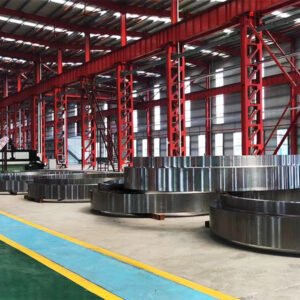
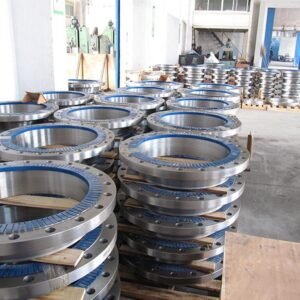
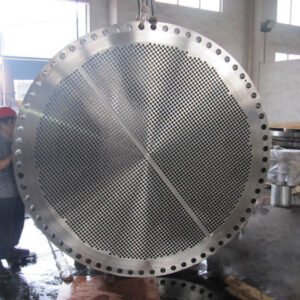
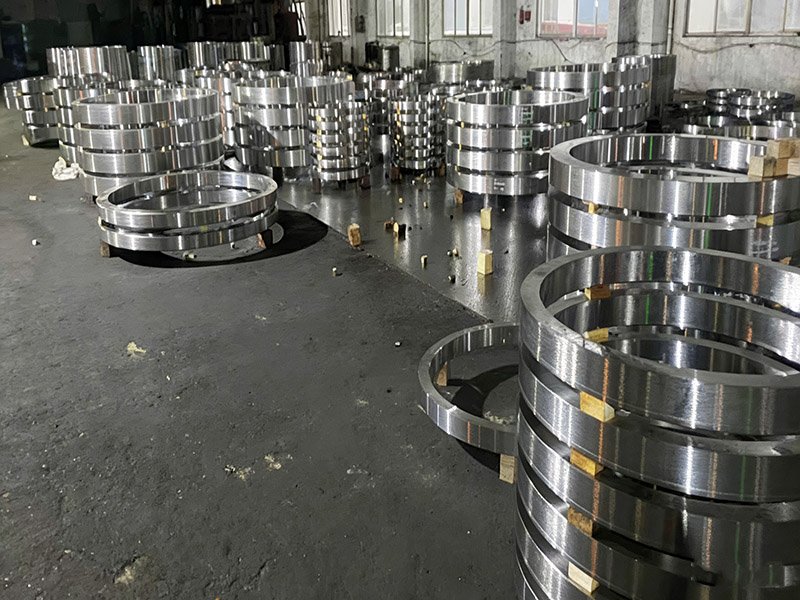
TIP TOP is a company where the main activity is the production of forged rings and components of high quality from 12X18H10T material. By bringing the metal through the process of forging, we actually improve its inherent properties so that it becomes a perfect solution for the most demanding sectors of the industry such as nuclear power, petrochemicals, and cryogenics.
Description
GOST 12X18H10T is one of the best titanium-stabilized austenitic stainless steels which is standardized by Russian GOST 5632. It is mainly praised for its intergranular corrosion resistance and excellent performance at high temperatures. It is thought of as the Russian counterpart of AISI 321 and EN 1.4541.
TIP TOP is a company where the main activity is the production of forged rings and components of high quality from 12X18H10T material. By bringing the metal through the process of forging, we actually improve its inherent properties so that it becomes a perfect solution for the most demanding sectors of the industry such as nuclear power, petrochemicals, and cryogenics.
What is 12X18H10T? (Equivalents and Advantages)
12X18H10T has been characterized mainly by the presence of the element Titanium (Ti). The role of this element is to serve as a stabilizer, which means it helps in preventing the nucleation of chromium carbides on the grain boundaries.
International Equivalents: it is a close match to AISI 321 (USA) and 1.4541 / X6CrNiTi18-10 (Europe).
Resistance to Intergranular Corrosion: The reason this steel is very resistant to intergranular corrosion is that it has been stabilized with titanium. Even after the time it has been allowed to cool down from the sensitizing temperature range of 450°C – 800°C, it still resists corrosion.
Wide Operating Temperature: The steel is not only nice and tough at the extremely low temperature of -196°C to which it has been exposed during cryogenic testing, but it is also capable of operating at high temperature ranges (up to 800°C) without losing its high impact toughness.
Chemical Composition (GOST Standard)
The mixture of Cr, Ni, and Ti is done so carefully that the result is a very stable austenitic phase.
| Element | Content (%) | Function |
| Carbon (C) | ≤ 0.12 | Base strength |
| Silicon (Si) | ≤ 0.80 | Oxidation resistance |
| Manganese (Mn) | ≤ 2.00 | Austenitizer |
| Chromium (Cr) | 17.00 – 19.00 | Corrosion resistance |
| Nickel (Ni) | 9.00 – 11.00 | Toughness & Stability |
| Titanium (Ti) | 5 x (C-0.02) ~ 0.8 | Stabilizer: Prevents intergranular corrosion |
| S / P | ≤ 0.020 / ≤ 0.035 | Low impurity levels |
Mechanical Properties and Physical Characteristics
Typical strength parameters for condition of solution-annealed forgings correspond with a good balance of strength and ductility.
Tensile Strength (Rm): ≥ 549 MPa
Yield Strength (Rp0.2): ≥ 216 MPa
Elongation (A): ≥ 40%
Hardness: HB ≤ 179 (Annealed condition)
Density: Approximately 7.93 g/cm³
Heat Treatment: Solution treatment is usually performed at a temperature ranging from 1050°C to 1100°C.
The Forging Advantage: Why Forge 12X18H10T?
Although in the form of plate or bar, one can obtain a Forged 12X18H10T that structurally will be much more sound and perfect to be used in high-stress environments:
Grain Refinement: When a material is forged, grains would be broken down and rearranged in the direction of the flow, so the grain is refined and that results in a nice big impact toughness increase and also a better fatigue resistance when you compare it to castings.
Structural Density: The act of forging removes internal voids and porosity that makes it possible for a component to be dense, leak-proof, and hence, able to withstand high pressurized vessels