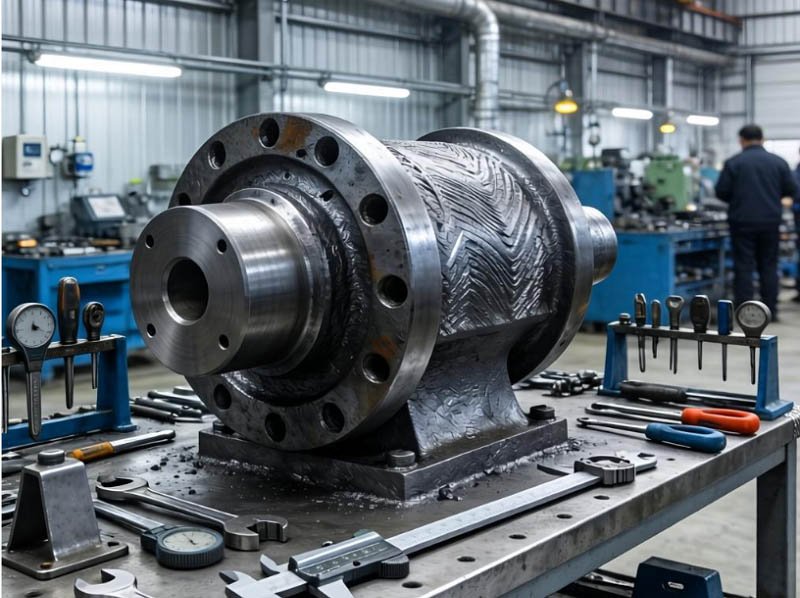
GH904 Steam Turbine Valve Body Forgings
Description
What are Steam Turbine Valve Body Forgings?
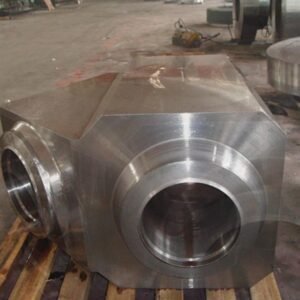
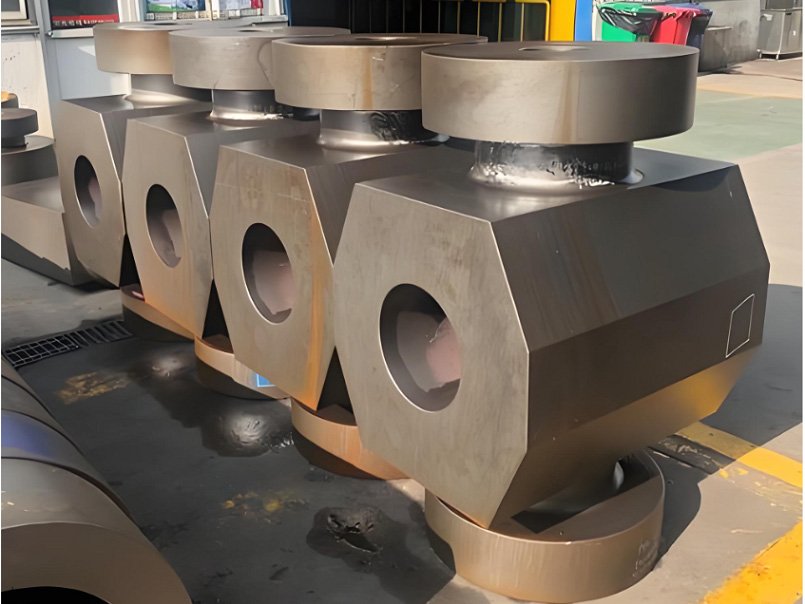
Steam turbine valve body forgings are essential pressure-bound parts that only support the control of the steam channel, includes the regulation of the turbine output, and the assurance of the safety of the working of the turbine units. In real operation, the parts are subjected to elevated temperature, pressure, and thermal cycle. Thus the valve body is usually considered as the component most subject to wear in a steam turbine system. Its capability will determine efficiency, safety, and the length of the service life.
Our GH904 steam turbine valve body forgings are made for these operating conditions, prioritizing structural integrity and long-term stability over mere initial strength.
Materials for Steam Turbine Valve Body Forgings
Choosing materials is a function of temperature and pressure parameters, and the service environment.
The alloys listed below are the ones most frequently used:
Newly developed ferritic heat-resistant steel: FW2
12% Cr martensitic steel: 2Cr12NiMo1W1V
Modified 9–12% Cr steels: F92, FB2
Nickel-based alloy: GH904
Among them, GH904 forging material
is generally used for the highest temperature ranges when creep resistance and structural stability are the foremost requirements.
All the materials are made by a combination of the following melting processes:
Electric Arc Furnace (EAF)
Ladle Refining (LF)
Vacuum Degassing (VD)
This method is aimed at the elimination of inclusions and reduction in the gas content, leading to the production of steel with fewer impurities and the achievement of better performance in forged components.
Manufacturing Process of Valve Body Forgings
The production of steam turbine valve body forgings is not just a single operation but is accomplished through a series of steps under stringent control.
Precision Forging
We perform either open die forging or multi-directional forging based on the design of the component.
Forging ratio, deformation path, and temperature which are the main parameters, are strictly managed. The objective is not only to form the component geometrically but also to enhance the inner microstructure by eliminating the voids and changing the grain direction.
Consequently, a tight forging is obtained which is capable of sustaining big pressure variations during the turbine running.
Heat Treatment Process
Heat treatment is carried out in two stages.
Post-forging heat treatment
Immediately after forging, stress relief and hydrogen diffusion treatment are performed. This step helps prevent internal defects such as white spots and prepares the material for machining.
Quenching and tempering
A controlled quenching and high-temperature tempering process is then applied. This helps achieve a stable tempered martensitic structure, giving the forging a balanced combination of strength, toughness, and fatigue resistance.
Inspection and Testing
Each valve body forging is inspected before delivery.
Typical inspection includes:
Ultrasonic testing (UT) for internal defects
Tensile and impact testing at room temperature
Metallographic examination for grain size and structure
High-temperature creep rupture testing (when required)
Inspection standards can follow customer specifications or common industrial standards such as JB/T and GB requirements.
Features of GH904 Valve Body Forgings
Stable Performance at High Temperature
GH904 and similar alloys are designed for long-term exposure to high-temperature steam. The material maintains strength and resists creep deformation over time.
Clean Internal Structure
Through controlled melting and forging, internal defects are minimized. This improves fatigue resistance and reduces the risk of failure during operation.
Dimensional Reliability
Forging combined with precision machining ensures proper fit during assembly, especially for sealing surfaces and connection interfaces.
Adaptable to Custom Requirements
Material grade, forging method, and inspection level can be adjusted based on drawings or project specifications.
Typical Applications
Steam turbine valve body forgings are mainly used in:
Steam inlet and control valve systems
High-pressure and intermediate-pressure turbine sections
Power generation equipment, including supercritical and ultra-supercritical units
They are particularly important in systems where long-term operation under high load is required.
Why Valve Body Forgings Matter in Turbine Systems
In a steam turbine, efficiency is not only determined by blades and rotors. Flow control components such as valve bodies also play a key role.
A well-manufactured valve body forging helps:
Maintain stable steam flow
Reduce leakage risk
Improve operational safety
Extend maintenance intervals
For this reason, material quality and forging process are often given priority in procurement decisions.
Supply Capability
We provide steam turbine valve body forgings based on customer drawings or technical requirements, including:
Material selection support
Forging and heat treatment
Machining allowance control
Inspection and documentation
Delivery condition can be adjusted depending on whether further machining will be carried out by the customer.