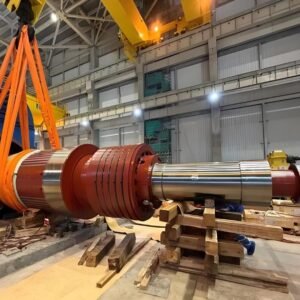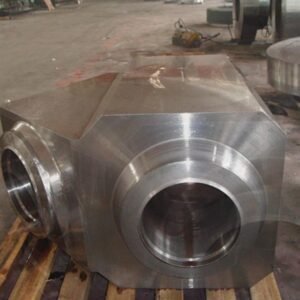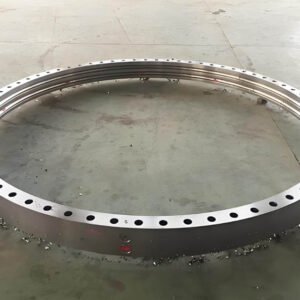
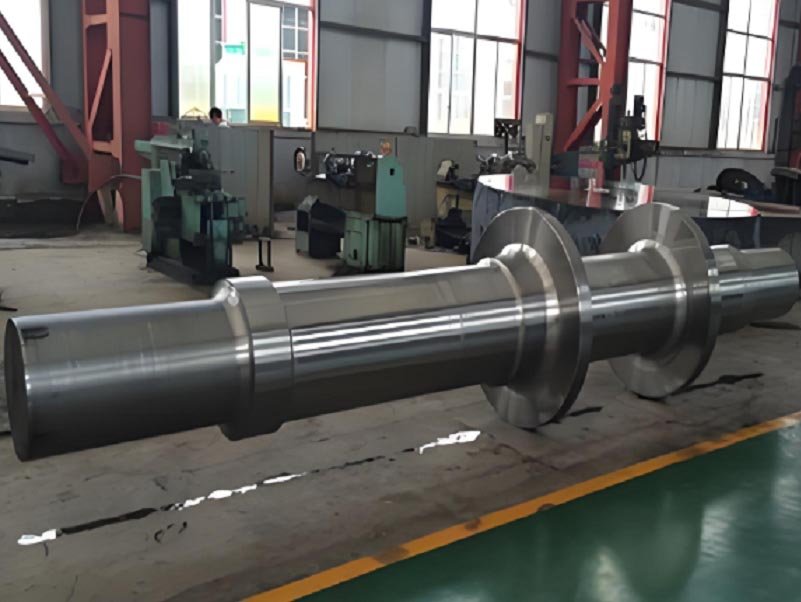
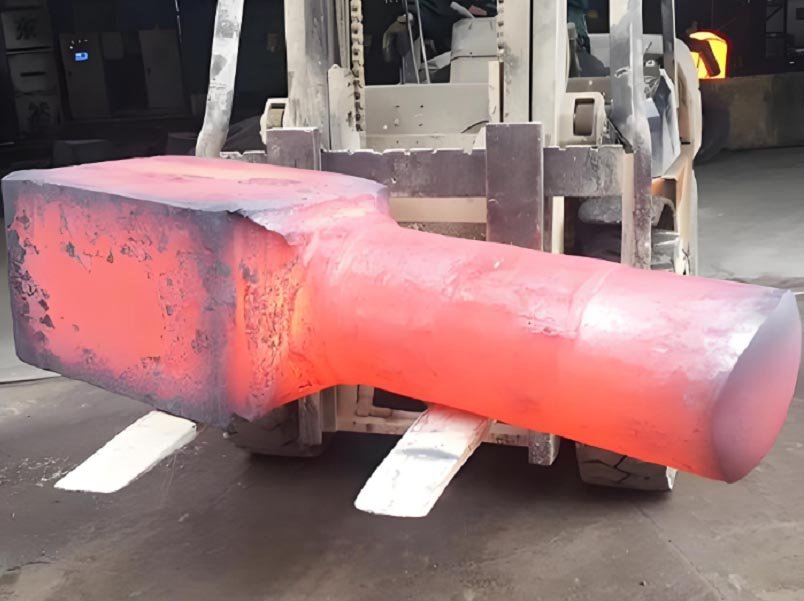
35CrMo Turbine Shaft Couplings Forging for Steam Turbine
Steam turbine coupling is a critical transmission component used for the coupling of turbine and generator or other rotating equipment. It plays an essential role in torque transmission, misalignment compensation, and vibration absorption.
Description
Steam Turbine Coupling Product Overview
Steam turbine coupling is a critical transmission component used for the coupling of turbine and generator or other rotating equipment. It plays an essential role in torque transmission, misalignment compensation, and vibration absorption.
In a typical coupling turbine generator system, turbine shaft couplings ensure smooth power transfer between the turbine and generator, helping protect key rotating components and improve overall system reliability.
Turbine Coupling Types and Typical Applications
Common turbine coupling types used in steam turbine systems include rigid couplings, flexible couplings, gear couplings, and diaphragm couplings. The selection depends on torque capacity, operating speed, alignment tolerance, and service conditions.
Compared with wind turbine coupling, which is designed for variable load and fluctuating speed, steam turbine coupling focuses more on high torque transmission, thermal stability, and long-term fatigue resistance in continuous operation.
Materials for Steam Turbine Shaft Couplings Forging
We select high-quality materials to manufacture turbine shaft couplings forging for steam turbine applications:
High-strength alloy steels such as 35CrMo, and 40Cr
Stainless steels and corrosion-resistant alloys including 304 and 316
Nickel-based alloys such as Inconel 718 for extreme working conditions
These materials provide excellent strength, toughness, and fatigue resistance, making them suitable for high-load steam turbine coupling applications.
Manufacturing Process of Turbine Coupling Forging
In the manufacturing of turbine coupling, we utilize a ten-thousand-ton press for precision die forging to ensure continuous and complete metal flow lines, significantly improving mechanical properties.
For high-strength alloy components, isothermal forging technology is applied to reduce internal stress and enhance material utilization, ensuring reliable performance in coupling turbine generator systems.
Heat treatment is a key process. Through controlled tempering, a uniform sorbite structure is achieved to improve overall mechanical properties. For components requiring high surface hardness, high-frequency quenching or nitriding treatment is used to achieve a surface hardness of HRC 58–62, greatly improving wear resistance. All critical parts undergo stress relief annealing to ensure dimensional stability.
Quality Control for Coupling of Turbine and Generator
Strict quality control standards are applied to every steam turbine coupling forging. All products undergo 100% non-destructive testing, including ultrasonic testing and magnetic particle inspection, to ensure there are no internal or surface defects.
This ensures each turbine coupling meets the reliability and safety requirements of modern steam turbine generator systems.