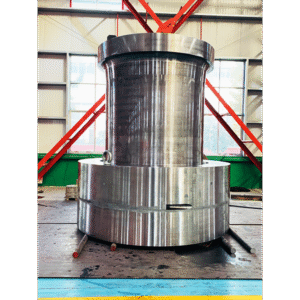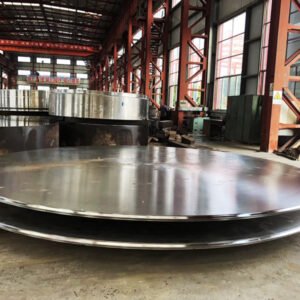
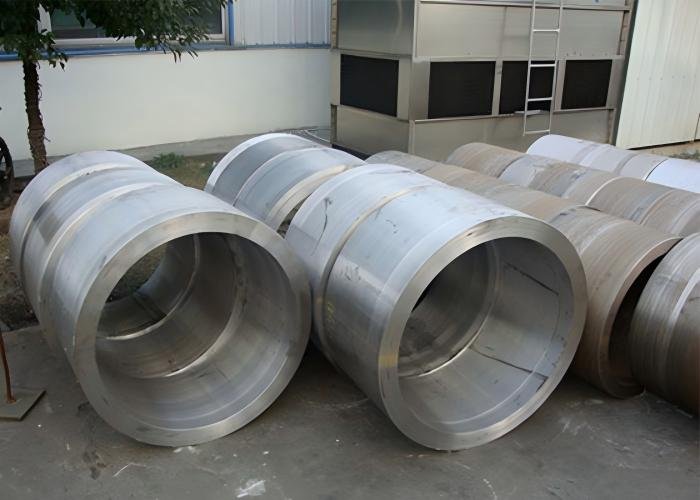
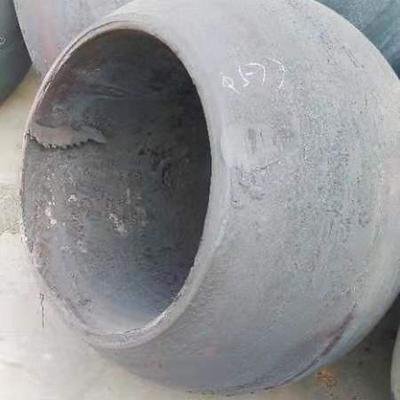
Carbon/Stainless/Duplex & Alloy Steels Large Ball Valve Body Forgings
Ball valves rely on a spherical closure element to start or stop flow, and they see service in everything from waterworks and transmission pipelines to refineries, chemical plants, and power stations.
Description
1. Introduction to Large Ball Valve Body Forgings
Ball valves rely on a spherical closure element to start or stop flow, and they see service in everything from waterworks and transmission pipelines to refineries, chemical plants, and power stations. The body is the most critical pressure‑bearing component—any defect there can compromise the whole valve. That’s why, for large‑diameter valves in severe conditions (high pressure, high/low temperature, or corrosive media), forgings are increasingly chosen over castings.
2. Common Forging Materials for Large Ball Valve Bodies and Selection Criteria
| Material Category | Common Grades | Typical Application Conditions |
| Carbon Steel | A105, A105N | General service, -29°C ~ 425°C |
| Low-Temperature Carbon Steel | LF2 | Low-temperature environments, -46°C ~ 400°C |
| Chromium-Molybdenum Steel (Heat-Resistant) | F11, F22, F91 | High-temperature and high-pressure service |
| Austenitic Stainless Steel | F304/304L, F316/316L, F321, F347 | Corrosive media and low-temperature conditions |
| Duplex Stainless Steel | F51 | Strong corrosion and chloride-ion environments |
| Nickel-Based Alloys | Monel, Inconel | Extreme conditions such as severe corrosion and ultra-high temperature |
Selection Guidelines:
- Medium Temperature: For normal-temperature pipeline media, A105 is preferred; for high-temperature steam and refining high-temperature processes, F11/F22/F91 are selected; for low-temperature LNG and cryogenic media, low-temperature carbon steel or austenitic stainless steel is chosen.
- Medium Corrosivity: For non-corrosive media such as clean water and natural gas, A105 is used; for sulfur-bearing oil/gas and acid/alkali media, stainless steel or duplex steel is selected; for H₂S-containing sour service, sulfur-resistant alloy steel is required.
- Pressure Class: For Class 150 ~ Class 600, A105 is commonly used; for Class 900 and above ultra-high-pressure pipelines and wellhead valves, high-strength alloy forgings such as 4130 and F22 are specified.
- Compliance with Standards: For exports to the Russian market, GOST standards take priority; for European and American projects, API 6D and ASTM A182 are followed; for domestic projects, GB/T and NB pressure-bearing forging standards apply.
- Cost Optimization: Carbon steel is preferred when service conditions permit; for corrosive or high-temperature conditions, alloy steel/stainless steel upgrades are applied to avoid material over-specification and unnecessary cost.
3. Forging Processes for Large Ball Valve Bodies
3.1 Steel Ingot Melting
High-quality electric arc furnace melting + LF refining + VD vacuum degassing are employed to reduce hydrogen and oxygen content, minimize internal inclusions, and prevent white spot cracks in the forging.
3.2 Cutting and Heating
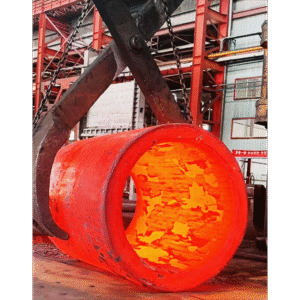
Ingots/billets are cut by sawing; heating is carried out in a car-bottom furnace with controlled heating rates, strictly monitoring the heating rate, starting forging temperature, and final forging temperature to avoid overheating and overburning.
3.3 Open-Die Forging (Mainstream Process for Large Valve Bodies)
Hydraulic presses are used for upsetting, drawing, piercing, mandrel forging, and saddle forging to produce the hollow main body blank of the valve body. Multiple forging strokes break up coarse as-cast grains and consolidate internal porosity. The vast majority of large-diameter valve bodies are produced via open-die forging.
3.4 Die Forging (for Small-to-Medium Valve Bodies)
Simple dies are used to improve blank dimensional accuracy and reduce subsequent machining allowances; however, equipment limitations make this unsuitable for extra-large valve bodies.
3.5 Post-Forging Heat Treatment
Normalizing, normalizing + tempering, annealing, and quenching + tempering (hardening and high-temperature tempering) are performed to eliminate forging stresses, refine grain structure, and achieve required mechanical properties (strength, hardness, impact toughness).
3.6 Rough Machining + Non-Destructive Testing (NDT)
After rough machining to remove scale, UT and MT inspections are carried out to detect internal cracks, lamination, and shrinkage defects at an early stage.
Industry standard: Extra-large ball valve body forgings = vacuum-degassed ingots + multiple open-die forging upsetting/drawing cycles + post-forging heat treatment.
4. Maximum Size Capabilities for Ball Valve Body Forgings
| Parameter | Capability |
| Maximum Outer Diameter | Up to 2.2 meters |
| Maximum Single-Piece Weight | Up to 16–18 tons |
| Typical Product | 56-inch, Class 900 ball valve body forging |
| Equipment | 3,500-ton open-die forging hydraulic press, etc. |
5. Quality Assurance for Large Ball Valve Body Forgings
Our quality assurance for large ball valve body forgings covers the entire process from raw material to finished delivery:
5.1. Raw Material Control
TIPTOP rigorously controls chemical composition and metallurgical quality of raw materials. Each incoming batch is verified against material certificates and heat numbers, with in-house laboratory retesting to ensure full compliance with design and standard requirements, establishing full traceability from the source.
5.2. Forging Process Control
Precise control of heating and forging parameters is maintained. We strictly enforce red-line standards for starting and final forging temperatures (e.g., for AISI 4130 steel, starting forging temperature is typically controlled at about 1180°C, and final forging temperature is不低于850°C) to avoid overheating or forging cracks and ensure uniform metal flow lines.
5.3. Heat Treatment Process
TIPTOP develops tailored heat treatment schemes based on material characteristics:
Carbon steel: Normalizing + tempering.
Heat-resistant steel: Quenching + tempering (hardening and high-temperature tempering) to achieve comprehensive mechanical properties.
Stainless steel: Solution annealing.
Controlled cooling after forging effectively eliminates internal stresses, and standard mechanical property testing is performed after heat treatment.
5.4. Non-Destructive Testing (NDT)
We have established a multi-dimensional NDT system to ensure quality:
UT: Effectively detects internal inclusions, cracks, and other subsurface defects.
MT: Accurately identifies surface and near-surface micro-cracks.
PT: Detects surface-open defects.
All critical forgings undergo 100% inspection to ensure defect-free delivery.
5.5. Quality System and Certification
Full implementation of ISO 9001 quality management system.
5.6. Full-Process Quality Traceability
TIPTOP has established a comprehensive digital traceability archive covering the entire lifecycle from cutting, heating, forging, machining, and heat treatment to final packaging and delivery. Each product is accompanied by complete material certificates and NDT reports.
6. Advantages of Our Large Ball Valve Body Forgings
6.1 Equipment Advantages
We own large open-die forging hydraulic presses and large-capacity car-bottom heat treatment furnaces, enabling us to produce large-tonnage, large-diameter valve body forgings without outsourcing, ensuring controllable delivery schedules.
6.2 Full Material Coverage
We mass-produce valve body forgings in carbon steel, chromium-molybdenum steel, 4130 alloy steel, various stainless steels, and duplex stainless steels. We are proficient in API, ASTM, and GOST material standards, serving domestic as well as Russian and European/American export orders.
6.3 Proven Forging Experience in Valve Bodies
With long-term collaboration with pipeline ball valve, wellhead ball valve, and refining high-pressure valve manufacturers, we have in-depth knowledge of ball valve body structural characteristics. Our optimized forging processes reduce common defects such as piercing eccentricity, uneven wall thickness, and internal bore cracks, thereby lowering customer machining rejection rates.