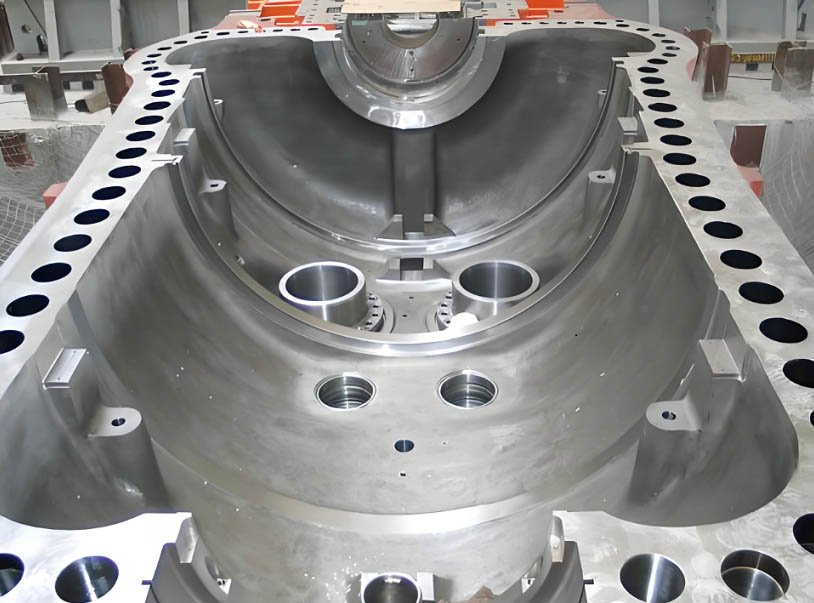
ZG15Cr2Mo1 Steam Turbine Cylinder Block Forgings
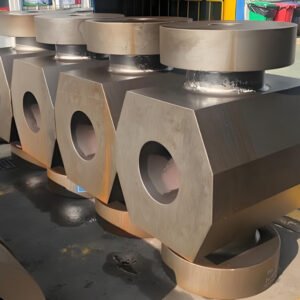
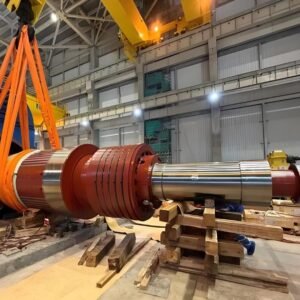
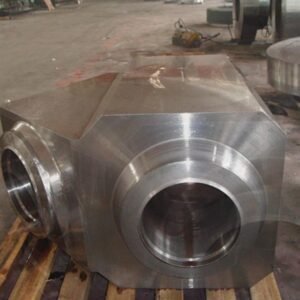
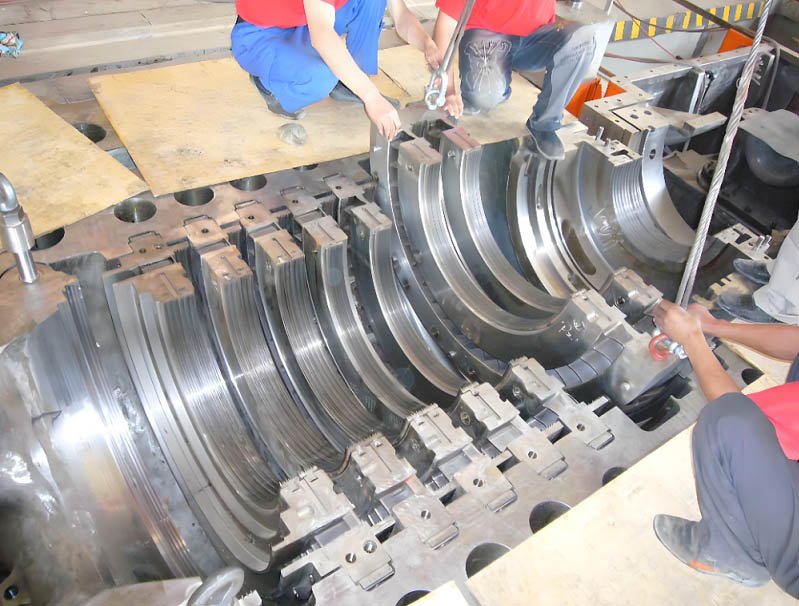
Steam turbine cylinder block forging is basically the external shell that encloses major internal parts like rotors, diaphragms, and steam flow control structures. The turbine cylinder is continuously running in a high-temperature and high-pressure steam environment besides being subjected to complex thermal stress and pressure loads during its operation.
Description
Overview of ZG15Cr2Mo1 Steam Turbine Cylinder Forgings
Steam turbine cylinder forgings hold a major place among pressure-containing parts, mainly utilized in thermal power, nuclear, and ultra-supercritical power plants. These mainly comprise the large high-pressure turbine cylinders and intermediate-pressure turbine cylinders that form the main structural casing parts of the steam turbine.
Steam turbine cylinder block forging is basically the external shell that encloses major internal parts like rotors, diaphragms, and steam flow control structures. The turbine cylinder is continuously running in a high-temperature and high-pressure steam environment besides being subjected to complex thermal stress and pressure loads during its operation.
As the development of modern power generation equipment is moving towards larger capacity and higher operating parameters, cast components being replaced by turbine cylinder forgings have proven to be an effective method for enhancing reliability and extending service life of the equipment.
What are Turbine Cylinder Forgings and their Major Features?
Steam turbine cylinder forgings make up the structural casing of a turbine. Based on pressure levels, turbine cylinders are divided into:
- high-pressure cylinders
- intermediate-pressure cylinders
- low-pressure cylinders
High-pressure and intermediate-pressure cylinders are the most heavily loaded, requiring them to be capable of withstanding the long-term effects that of high-temperature and high-pressure steam.
Some of the inherent structural features of large turbine cylinder block forgings include:
Highly Complex Geometry
With the steam inlet and outlet channels, extraction ports, and several flange connection surfaces, the turbine cylinder’s overall structure is complex, which poses a challenge in achieving precise forging and machining control.
Large Cross Sections with Thick-walls
Typically, large turbine casing forgings have thick walls and sizeable cross-sections. The material restoration of such forgings should retain a uniform mechanical properties and microstructure throughout the entire forging process.
Very Accurate Surfaces for Mating
It is essential for the turbine cylinder to furnish very accurate surfaces for mating during installation with the turbine casing centering surfaces, bearing seats, and other structural components so that operation of the turbine can be stabilized.
Choosing Materials for Steam Turbine Cylinder Block Forgings
High temperature and pressure conditions in service that last for a long time dictate that steam turbine cylinder forgings are generally made from heat-resistant alloy steels.
Typical Alloy Steel Grades
Common materials include:
ZG15Cr2Mo1
ZG15Cr1Mo1V
These materials belong to the Cr-Mo-V series heat-resistant alloy steels, which are widely used in high-temperature power generation equipment.
Material Performance Characteristics
These alloy steels provide important performance advantages for steam turbine cylinder block forgings, including:
High-temperature strength
Excellent creep resistance
Stable microstructure during long-term operation
These materials are suitable for long-term operation within a temperature range of approximately 567°C to 650°C.
Smelting Requirements
The production of ZG15Cr2Mo1 turbine cylinder forgings requires high material purity. Pure smelting technology is applied to strictly control harmful elements, gas content, and non-metallic inclusions, ensuring stable mechanical performance.
Manufacturing Process of Steam Turbine Cylinder Forgings
Large steam turbine cylinder block forgings require strict control throughout the manufacturing process, including steel smelting, forging deformation, and heat treatment.
Smelting and Steel Ingot Production
The steel is produced using a combined process of:
Electric arc furnace primary smelting
Ladle refining (LF / VD / VOD)
Vacuum degassing
This process helps control internal defects such as porosity, segregation, and inclusions, improving the overall quality of the steel.
For large turbine cylinders used in supercritical power units, large-tonnage steel ingots are required to ensure consistent mechanical performance throughout the entire forging.
Forging Process
Optimized forging process design is used to manufacture large turbine cylinder forgings, typically involving multi-directional forging operations.
Upsetting and Drawing
Repeated upsetting and drawing operations help eliminate internal defects such as porosity and looseness in the steel ingot.
Metal Flow Line Control
The forging deformation process ensures that the metal flow lines follow the main stress direction, improving mechanical strength and fatigue resistance.
Dimensional Control
Specialized tooling such as V-shaped anvils or dedicated forging dies is used to maintain wall thickness uniformity and dimensional stability.
Heat Treatment Process
Advanced heat treatment processes are used to ensure the required mechanical performance of the steam turbine cylinder forging.
Post-Forging Heat Treatment
This process eliminates forging stress, refines grain size, and improves microstructural uniformity.
Normalizing and Tempering
Normalizing followed by tempering produces a stable tempered microstructure, achieving a good balance between strength, toughness, and high-temperature performance.
Intermediate Annealing
When necessary, intermediate annealing is carried out during the manufacturing process to remove internal processing stress.
Accurate temperature monitoring using contact thermocouples ensures heat treatment stability and helps guarantee reliable operation of turbine components under high-temperature conditions.
Typical Applications of Steam Turbine Cylinder Forgings
Due to their excellent mechanical performance and high-temperature resistance, steam turbine cylinder block forgings are widely used in modern power generation equipment.
Ultra-Supercritical Thermal Power Units
Large 600MW and 1000MW ultra-supercritical steam turbine units require high-quality turbine cylinder forgings to withstand extreme operating conditions.
Nuclear Power Steam Turbines
In nuclear power plants, steam turbine cylinder forgings are used in pressure cylinder structures that demand high reliability and safety.
Large Power Generation Units Above 300MW
Many turbine cylinder components used in 300MW and larger generator units are manufactured in accordance with JB/T 7024 standards.
Technical Advantages of ZG15Cr2Mo1 Turbine Cylinder Forgings
High Material Purity
Pure smelting technology helps control non-metallic inclusions and harmful elements, ensuring high-quality alloy steel for turbine components.
Uniform Internal Structure
The forging process eliminates typical casting defects and produces a dense and uniform grain structure, improving overall reliability.
Excellent High-Temperature Performance
ZG15Cr2Mo1 alloy steel provides strong high-temperature strength and creep resistance, making it suitable for long-term service up to 650°C.
High Operational Reliability
Strict inspection procedures ensure that each steam turbine cylinder forging meets internal quality requirements and maintains structural integrity.
Full Manufacturing Process Control
A complete manufacturing system covers smelting, forging, heat treatment, machining, and inspection, ensuring consistent product quality.